
MEPCO Bill Online Check 2026: Paying an electricity bill should never feel like a guessing game, yet for millions of households across South Punjab, it often does. Between confusing tax breakdowns, unpredictable due dates, and the constant worry of a lost paper bill, many MEPCO consumers find themselves searching for a simpler way to stay on top of their electricity expenses. The good news is that checking your MEPCO bill online is now faster, easier, and more reliable than ever before.
MEPCO Bill Online Check 2026
This guide walks you through everything you need to know about the MEPCO bill online check process — from finding your reference number to understanding every charge on your statement, and even projecting your next bill before it arrives.
What Is MEPCO and Why Does Online Bill Checking Matter?
MEPCO, short for Multan Electric Power Company, is one of Pakistan’s largest electricity distribution companies operating under WAPDA. It supplies power to a vast stretch of South Punjab, covering everything from bustling city centers to smaller towns and rural communities. Given the sheer size of its consumer base, MEPCO has invested heavily in digital solutions that let customers manage their electricity accounts without ever stepping into an office.
The shift toward online MEPCO bill check services reflects a broader change in how utility companies serve their customers. Instead of waiting for a postal delivery or standing in long queues, consumers can now pull up their exact bill amount, due date, and consumption history within seconds. This isn’t just a convenience; for households managing tight monthly budgets, it’s a practical tool that helps avoid late payment penalties and unexpected disconnections.
How to Check Your MEPCO Bill Online: Step-by-Step
Checking your bill is a straightforward process that requires only one of two pieces of information. Here’s exactly how it works.
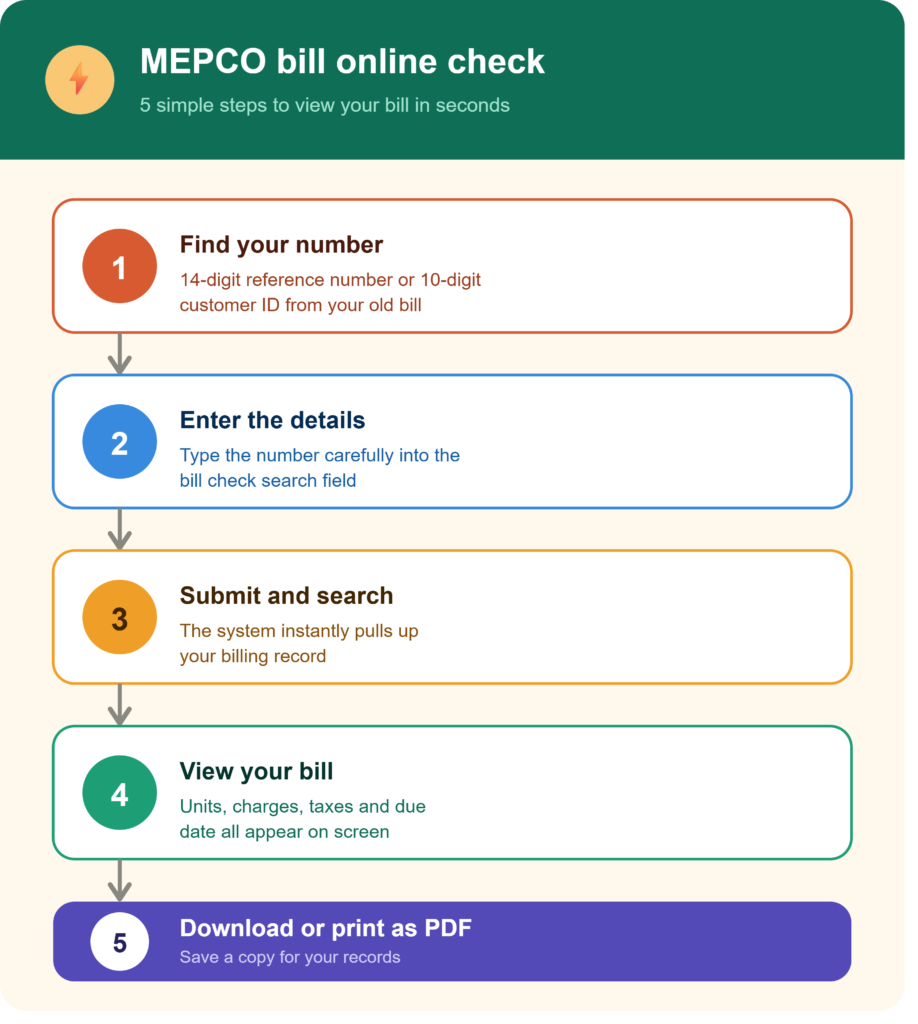
Step 1: Locate Your Bill Identification Number
Every MEPCO consumer has two key identifiers printed on their paper bill or original installation documents:
- A 14-digit reference number, which changes with each new billing cycle
- A 10-digit customer ID, which stays fixed and is tied permanently to your meter
If you’ve kept any previous bill, either number will be visible near the top of the document. New consumers can find these details on the documentation provided at the time of meter installation.
Step 2: Enter the Details on the Bill Check Portal
Once you have your reference number or customer ID ready, simply enter it into the designated search field. Double-check the digits before submitting, since even a single incorrect digit will prevent the system from pulling up your record. This is the most common reason people encounter an error message during this step.
Step 3: Submit and Review Your Bill
After submission, your complete bill should appear almost instantly, displaying your consumption units, applicable charges, taxes, and the total payable amount along with the due date. If nothing appears, the system will typically explain what went wrong, whether it’s an invalid number format or a bill that hasn’t been generated yet for the current cycle.
Step 4: Download or Print for Your Records
Once your bill is visible on screen, you have two simple options. You can print it directly using the standard Ctrl + P shortcut, or save it as a PDF file to keep a digital copy on your phone or computer. Many consumers prefer keeping both a printed and digital copy, especially for tax records or business expense tracking.
Step 5: Bookmark the Page for Future Use
Since you’ll likely need to repeat this process every month, saving the bill-check page to your browser bookmarks can save valuable time going forward. This small habit means you’ll never have to search for the right website again.
It’s worth emphasizing that there is absolutely no legal or practical difference between a traditional paper bill and its online duplicate. Both carry identical validity for payment purposes, and the online version exists purely to make life easier for the consumer.
Using the MEPCO Bill Calculator Before Your Bill Is Generated
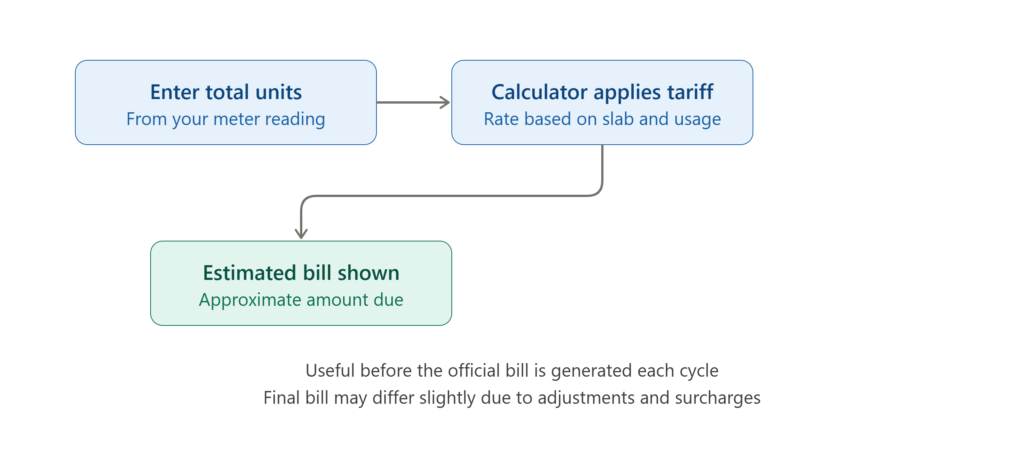
One of the most useful tools available to MEPCO consumers is the bill calculator, designed specifically for situations where your official bill hasn’t been issued yet but you want a reasonably accurate estimate of what you’ll owe.
To use it, you only need the total number of units your meter has recorded for the current billing period. Once entered, the calculator factors in your consumption pattern and produces an approximate bill figure. While this won’t be penny-perfect, since it can’t account for every adjustment or surcharge applied during final billing, it gives you a strong sense of what to expect financially, allowing you to plan your monthly budget with more confidence.
This feature is particularly valuable during peak summer months, when air conditioning use can cause electricity consumption — and therefore bills — to spike unexpectedly. Knowing roughly what you owe before the official bill arrives can prevent unpleasant financial surprises.
Breaking Down the Charges on Your MEPCO Electricity Bill
Many consumers glance at their total amount due without understanding what actually makes up that number. MEPCO bills are composed of several distinct charges, and understanding each one can help you spot errors or simply make sense of fluctuations from month to month.
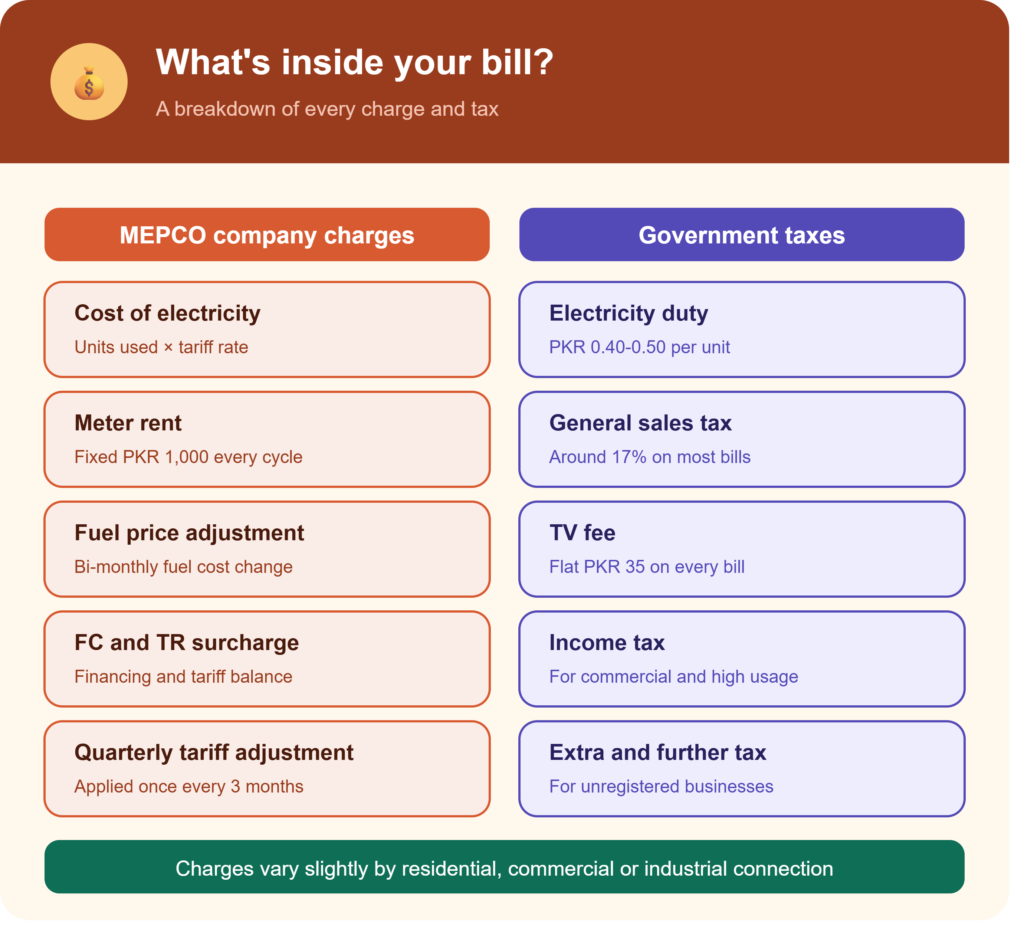
Cost of Electricity This is the foundation of your bill, calculated by multiplying total units consumed by the applicable per-unit tariff rate. For example, 200 units consumed at a rate of 60 PKR per unit would produce a base cost of 12,000 PKR, before any additional charges or taxes are applied.
Meter Rent A fixed charge of 1,000 PKR applies to every WAPDA consumer, regardless of how much electricity was actually used during the billing period. Even a vacant property with a connected meter will see this charge.
Fuel Price Adjustment (FPA) Also known as Fuel Cost Adjustment, this charge compensates for the additional cost of generating electricity through rental power plants when fuel prices rise. It’s applied on a bi-monthly basis, meaning fuel price increases in one month often appear as an adjustment on a bill roughly two months later.
Service Charges If your connection has been temporarily disconnected rather than permanently removed, a monthly service rent of approximately 175 PKR keeps your meter connection active for future reactivation without requiring a brand-new installation.
Financing Cost (FC) Surcharge This surcharge helps manage loans and financial obligations across the power sector. For consumers using more than 100 units, it typically adds 3 to 4 PKR per unit, depending on total consumption.
Tariff Rationalization (TR) Surcharge When the tariff rate set by NEPRA falls short of what power companies actually need to operate, including payments to rental power producers, this surcharge bridges part of that gap. The government covers a portion through subsidies, while the rest is passed on through consumer bills.
Quarterly Tariff Adjustment (QTR) Applied once every three months, this charge accounts for fluctuations in fuel prices, currency exchange rates, and transmission costs, helping stabilize the power sector against broader economic shifts.
Deferred Amount This reflects the difference between your Average Monthly Billing (AMB) and your actual recorded consumption. If you’re in credit, a portion is deducted monthly; if in debit, a portion is added. This figure typically begins appearing from the second billing cycle for new AMB customers.
Government Taxes Included in Your MEPCO Bill
Beyond MEPCO’s own charges, electricity bills across Pakistan also carry several government-mandated taxes:
- Electricity Duty — Generally between 0.40 and 0.50 PKR per unit, applied once consumption exceeds 100 units in a billing cycle.
- Television Fee — A flat 35 PKR charge applied to all consumers regardless of usage, supporting state broadcasting services.
- General Sales Tax (GST) — Roughly 17%, applied broadly across almost all consumer categories.
- Income Tax — Charged on commercial and industrial consumers, as well as high-consumption residential users.
- Extra Tax — An additional levy specifically for commercial consumers.
- Further Tax — Applied to businesses lacking valid tax registration, such as an NTN or GST number.
- Retailer Sales Tax — Targets shop owners and retail businesses to bring them into the formal tax documentation system.
Understanding these line items removes much of the mystery from your monthly statement and makes it far easier to budget accurately.
Checking Your MEPCO Bill Payment Status
Confirming whether a bill has actually been paid is just as important as checking the amount owed, particularly for households managing multiple connections or businesses tracking several meters at once.
The MEPCO SMART mobile app, developed officially by PITC, is the most reliable way to verify payment status. After installing the app from the Play Store and registering with basic details like your name, CNIC, and mobile number, you can add a meter using your 10-digit consumer ID. Once added, the home screen displays your most recent bill along with a clear status marker showing whether it’s been paid or remains pending. The app also supports multiple meters under one account, which is especially useful for landlords or business owners managing several properties.
Staying Informed About Load Shedding Schedules
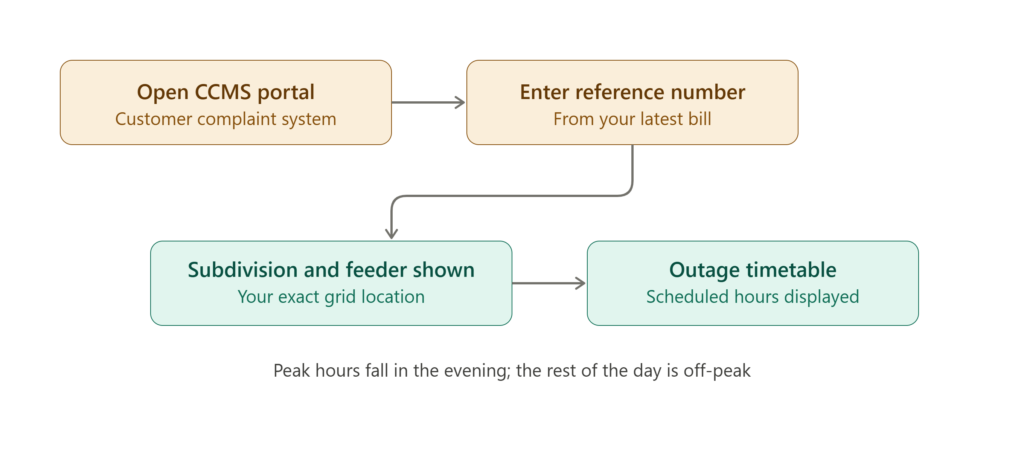
Power outages remain a frustrating reality for many consumers, but staying informed about scheduled load shedding can help you plan your day more effectively. The CCMS (Customer Complaint Management System) department manages and publishes these schedules. By entering your bill reference number on the official CCMS portal, you can view your specific subdivision, feeder details, and the associated outage timetable for your exact location.
For households trying to minimize the impact of load shedding, knowing peak and off-peak hours is also useful. Generally, peak hours fall in the evening, shifting slightly depending on the season, with the remaining twenty hours of the day classified as off-peak. Running heavy appliances during off-peak hours can help reduce strain on the grid and may also contribute to lower overall consumption.
Receiving Your Bill via SMS or Email
MEPCO offers consumers the option to receive bill notifications directly on their mobile phones or email inbox, removing the need to actively check the website every month.
For SMS notifications, you can dial the designated short code or send a text message containing your reference number to activate the service. Alternatively, visiting your nearest MEPCO subdivision office allows you to register in person, which some consumers prefer for the added assurance of face-to-face confirmation.
Email registration follows a similarly simple process: enter your email address and 14-digit reference number on the subscription page, and your monthly bill will be delivered directly to your inbox going forward.
Net Metering: A Smart Way to Reduce Your MEPCO Bill
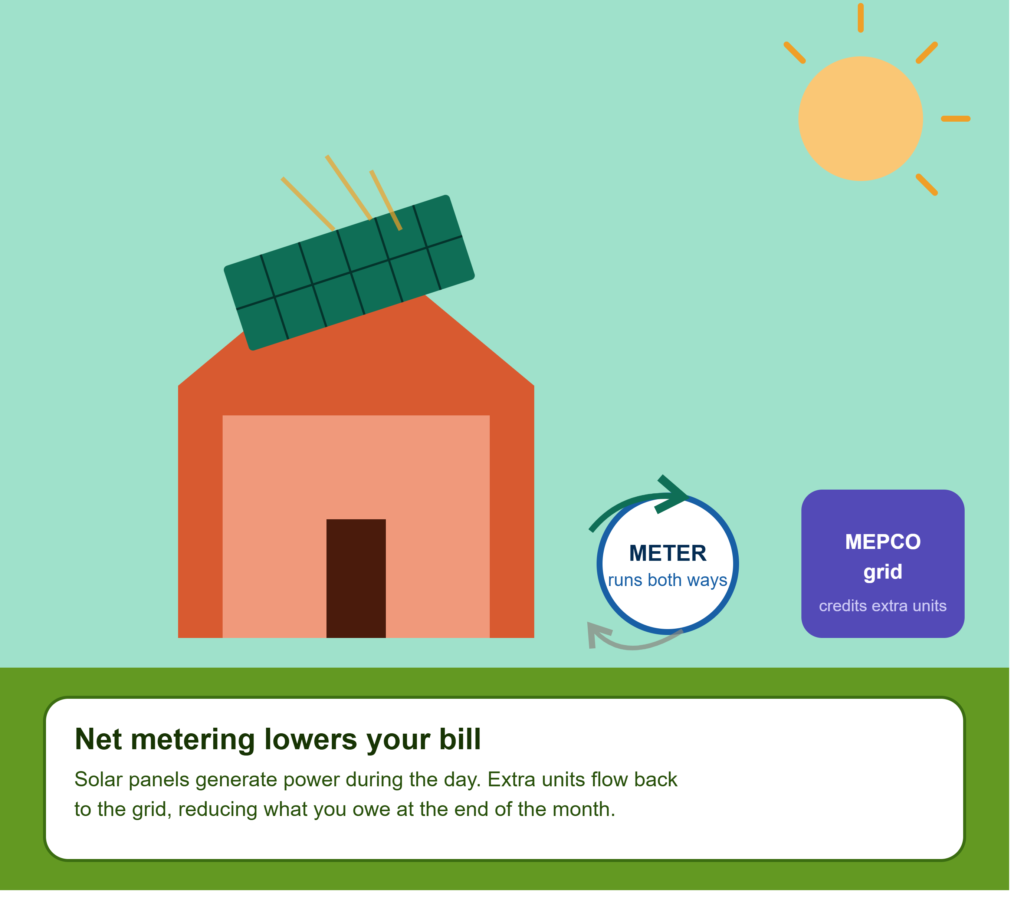
With electricity prices steadily climbing, many MEPCO consumers are exploring net metering as a long-term solution. This system allows households and businesses with solar panels to feed excess electricity back into the grid, effectively running their meter backward and reducing their net payable amount.
Beyond direct savings, net metering offers several broader benefits. It makes renewable energy investments more financially attractive, contributes to overall grid stability by balancing supply during high-production periods, and reduces dependence on fossil fuel-based power generation. For consumers willing to make the initial investment in solar infrastructure, net metering represents one of the most effective ways to gain long-term control over electricity costs.
Practical Tips to Lower Your Monthly Electricity Bill
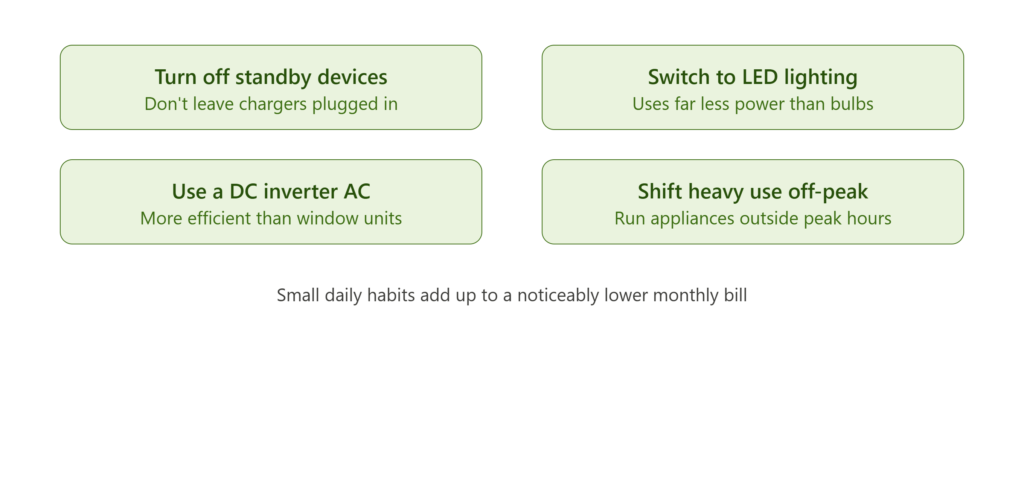
A few simple habits can meaningfully reduce your consumption over time:
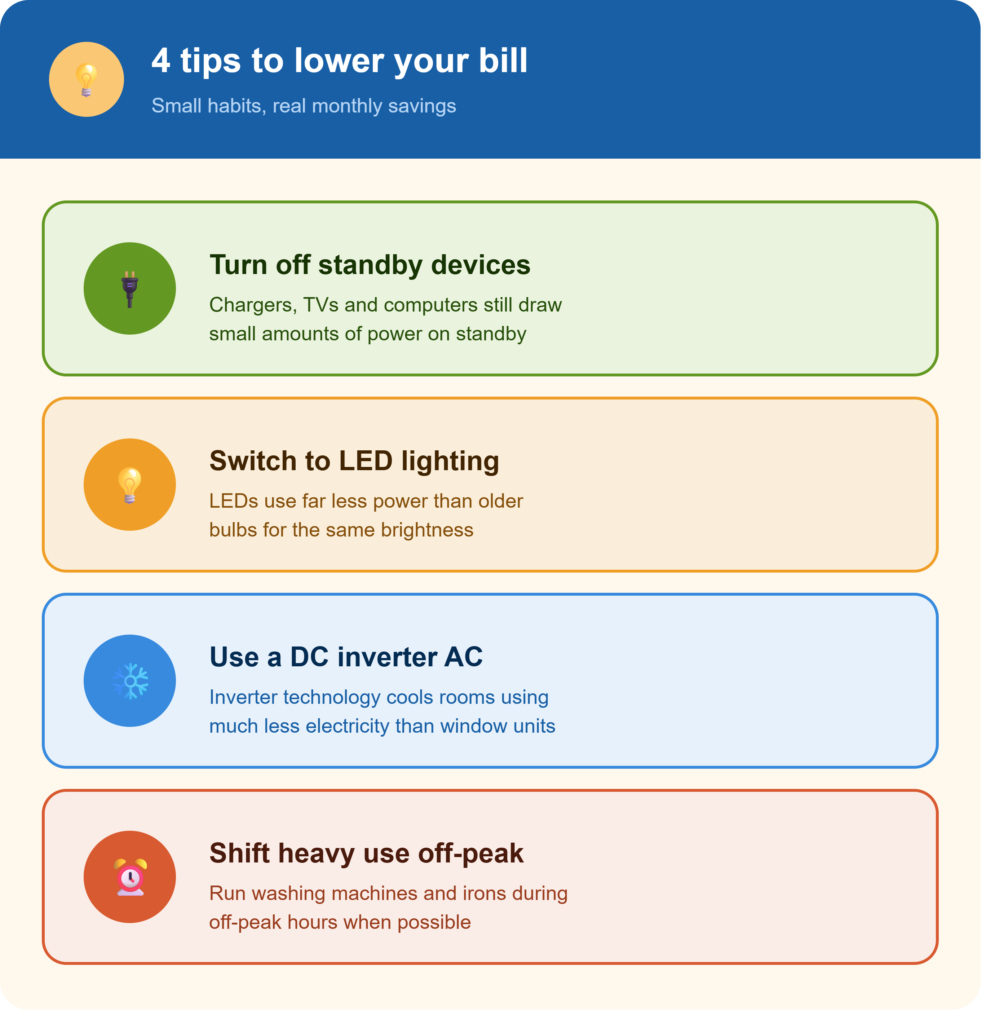
- Turn off devices completely rather than leaving them on standby, since appliances like televisions, chargers, and computers continue drawing small amounts of power even when not actively in use.
- Switch to energy-efficient appliances and LED lighting, which consume significantly less power while delivering comparable or better performance than older models.
- Consider a DC inverter air conditioner instead of a traditional window unit, since inverter technology uses considerably less electricity to maintain the same temperature.
- Shift heavy appliance use to off-peak hours whenever your schedule allows, easing demand during costly peak periods.
Registering Complaints and Tracking Their Status
If you encounter a billing discrepancy or service issue, MEPCO and the broader regulatory framework provide accessible complaint channels. Complaints can be registered online through the official NEPRA complaint portal, and tracked either by calling helpline numbers or entering your 14-digit reference number through the online tracking system.
For general electricity issues, the National Electricity Complaint Center can be reached by dialing 118, a number that covers all major distribution companies across Pakistan, including MEPCO, LESCO, FESCO, IESCO, and others. For concerns specific to the MEPCO region, a dedicated helpline number is also available.
Frequently Asked Questions
Does the duplicate bill show the correct due date?
Yes. The duplicate bill displays the same due date as the original, along with identical charges, taxes, and consumer information.
Can I view my previous months’ MEPCO bills online?
Yes. Your bill history can be checked through the dedicated bill history option, allowing you to review past payments and amounts for record-keeping.
How often is my MEPCO bill updated online?
Your bill is updated each month once the new billing cycle is generated. If a bill doesn’t appear, it usually means the current cycle hasn’t been issued yet, in which case the bill calculator can give you an estimated amount.
Can I view my previous months’ MEPCO bills online?
Yes. The duplicate bill displays the same due date as the original, along with identical charges, taxes, and consumer information.
Does the duplicate bill show the correct due date?
Yes. Your bill history can be checked through the dedicated bill history option, allowing you to review past payments and amounts for record-keeping.