
Peak Hours Kya Hotay Hain Aur Bill Par Asar: Electricity bills often confuse many users, especially when terms like “peak hours” and “off-peak hours” come into play. Most people only notice that their bill has increased but do not understand the real reason behind it. The concept of peak hours is directly linked to how electricity demand changes throughout the day.
When a large number of people use electricity at the same time, the load on the power system increases. This high-demand period is called peak hours. During this time, electricity rates are higher compared to normal hours. This has a direct impact on your monthly electricity bill.
Peak Hours Kya Hotay Hain Aur Bill Par Asar
Understanding peak hours is not just about saving money. It also helps you become a smarter energy user. In this guide, we will explain what peak hours are, how they work, and how they affect your electricity bill in a simple and practical way. Peak Hours Kya Hotay Hain Aur Bill Par Asar
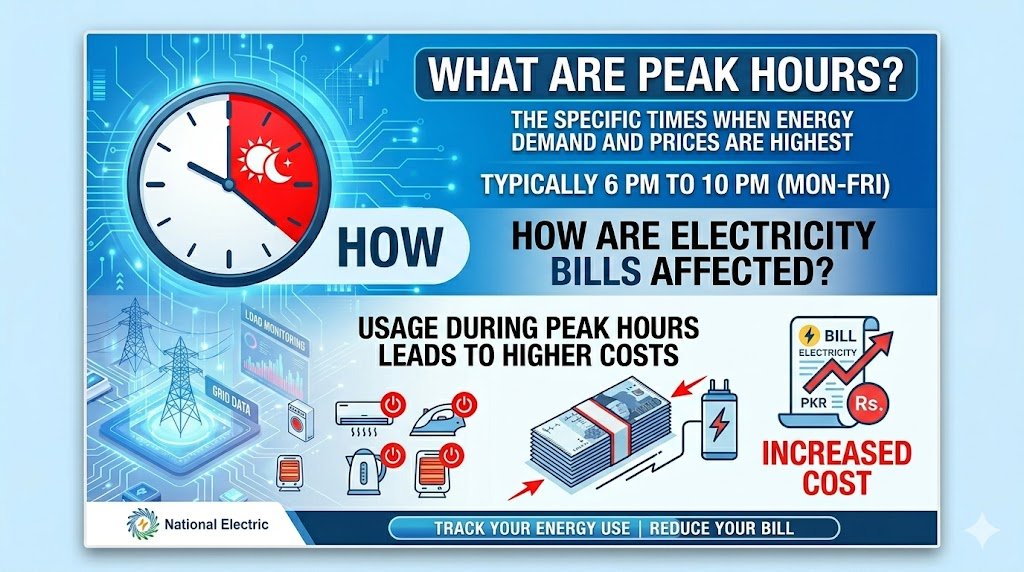
What Are Peak Hours in Electricity?
Peak hours refer to specific time periods when electricity demand is at its highest. This usually happens when households, offices, factories, and commercial users all consume power at the same time. Peak Hours Kya Hotay Hain Aur Bill Par Asar
Think of it like rush hour traffic on a busy road. Everything slows down because too many vehicles are on the road at once. In the same way, the electricity grid becomes heavily loaded during peak hours. Peak Hours Kya Hotay Hain Aur Bill Par Asar
To manage this pressure, electricity providers increase the cost per unit during peak hours. This encourages people to reduce usage during high-demand times and shift consumption to other hours of the day. Peak Hours Kya Hotay Hain Aur Bill Par Asar
Simple Definition of Peak Hours
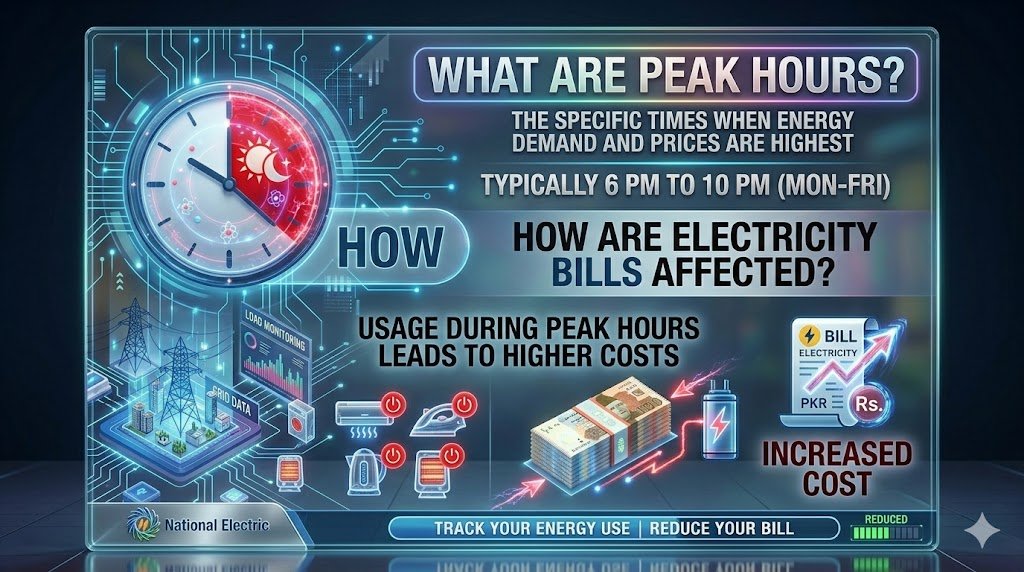
Peak hours are the time slots when electricity demand reaches its maximum level, resulting in higher electricity prices per unit. These hours are part of a Time of Use (TOU) billing system.
In simple words, if you use electricity during peak hours, you pay more. If you use it during off-peak hours, you pay less. This system helps balance electricity demand across the day.
Why Peak Hours Exist
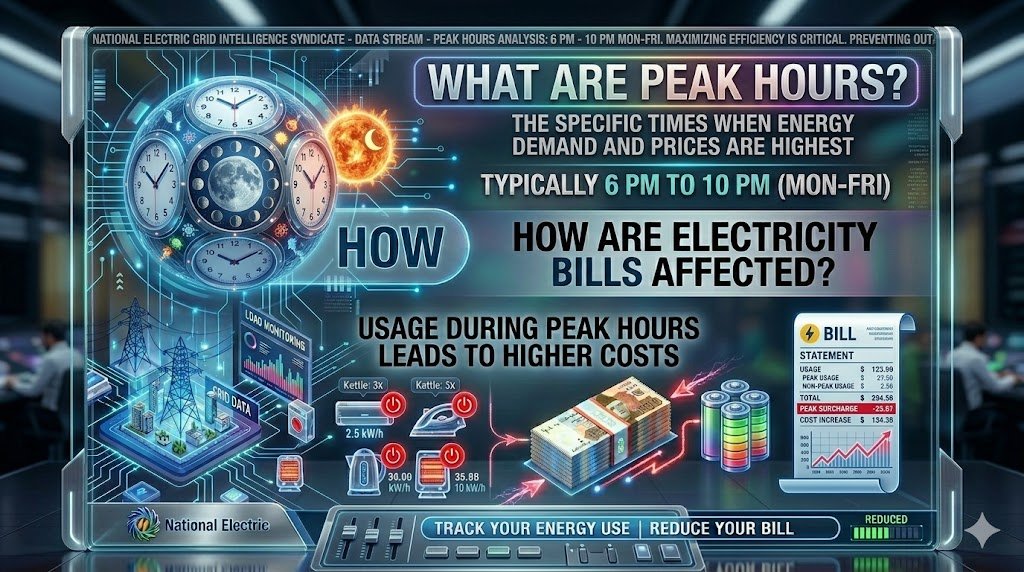
Peak hours are not designed just to increase bills. They exist for energy management and system stability. When electricity demand suddenly increases, power plants must generate more electricity instantly, which is more expensive and less efficient. Peak Hours Kya Hotay Hain Aur Bill Par Asar
Peak hour pricing helps in:
- Balancing electricity demand
- Preventing power system overload
- Reducing chances of power outages
- Encouraging efficient energy use
Without this system, electricity networks would face frequent breakdowns due to overloading.
Time of Use (TOU) System Explained
In many countries, including Pakistan, electricity billing is based on a Time of Use (TOU) system. Under this system, electricity prices change depending on the time of usage. Peak Hours Kya Hotay Hain Aur Bill Par Asar
There are two main categories:
- Peak hours: High electricity rates
- Off-peak hours: Lower electricity rates
This system is mainly used for users with smart or TOU meters, where electricity consumption is tracked based on time.
Peak Hours in Pakistan’s Electricity System
In Pakistan, distribution companies use TOU meters for certain consumers. These meters record electricity usage separately for peak and off-peak hours.
While timings may slightly differ between regions and electricity companies, peak hours generally fall in the evening and early night when household usage increases.
This system is widely used to encourage energy saving and reduce pressure on the national grid during high-demand hours. Peak Hours Kya Hotay Hain Aur Bill Par Asar
Typical Peak and Off-Peak Timings
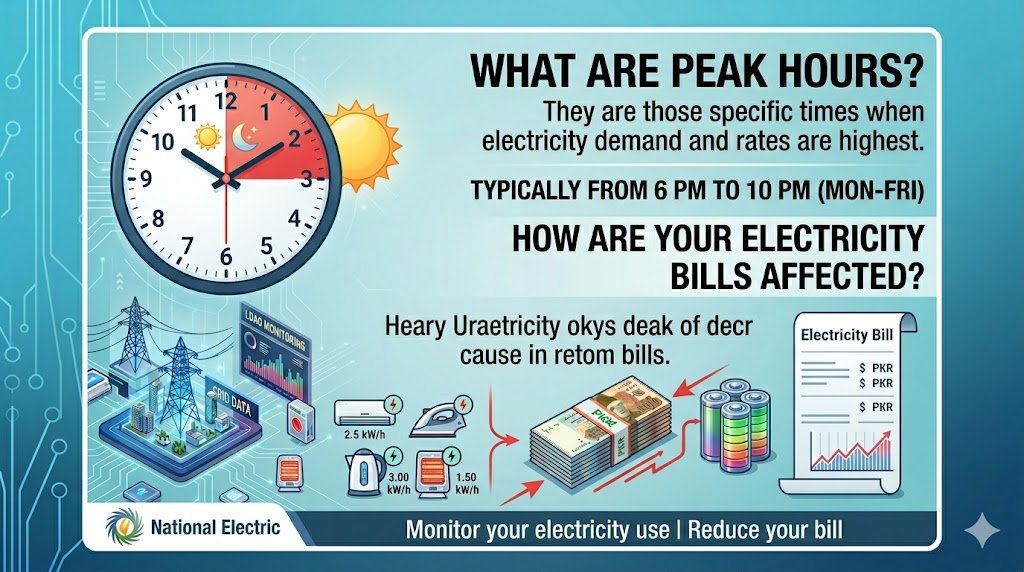
Although exact timings may vary, the general pattern is:
- Peak Hours: Evening to late night (high usage time)
- Off-Peak Hours: Late night to early morning (low usage time)
Most households use more electricity in the evening, which is why this period is considered peak time.
How Peak Hours Affect Electricity Billing
Electricity billing becomes more expensive during peak hours because the per-unit rate increases. Even if your total electricity usage remains the same, the timing of usage can increase your bill.
This is known as dynamic pricing, where the cost of electricity changes based on demand conditions. Peak Hours Kya Hotay Hain Aur Bill Par Asar
So, two households using the same number of units may receive different bills depending on when they use electricity.
Difference Between Peak and Off-Peak Rates
During peak hours, electricity costs significantly more per unit compared to off-peak hours. Off-peak electricity is cheaper because demand is lower and the system is under less stress.
| Time Period | Electricity Cost | Demand Level |
|---|---|---|
| Peak Hours | High | High |
| Off-Peak Hours | Low | Low |
This difference encourages users to shift heavy electricity usage to off-peak times. Peak Hours Kya Hotay Hain Aur Bill Par Asar
Slab System and Its Impact on Bills
Electricity bills are also affected by consumption slabs. As you use more units, you move into higher slabs where the per-unit price increases.
When peak hour rates and high slab rates combine, the electricity bill increases significantly. This is one of the main reasons users experience unexpectedly high bills.
Overall Impact of Peak Hours on Bills
Peak hours have a direct impact on monthly electricity expenses. Even if your total consumption is unchanged, using electricity during peak times can increase your bill.
This impact is especially noticeable in homes and businesses that rely heavily on electricity during evening hours. Peak Hours Kya Hotay Hain Aur Bill Par Asar
Impact on Household Electricity Usage
In homes, peak hours usually coincide with high appliance usage. Families return home in the evening and use lights, fans, ACs, and kitchen appliances all at once.
This leads to:
- Higher monthly electricity bills
- Increased energy consumption during peak hours
- Difficulty managing household budgets
Impact on Businesses and Commercial Users
For businesses, peak hour electricity usage can significantly affect operating costs. Shops, offices, and small industries often run multiple machines during working hours.
If operations overlap with peak hours, electricity costs increase and profit margins shrink. This is why many businesses try to shift heavy operations to off-peak times.
Appliances That Increase Peak Hour Load
Some appliances consume more electricity and contribute heavily to peak hour demand:
- Air conditioners
- Water pumps
- Electric heaters
- Washing machines
- Irons and microwaves
These appliances, when used during peak hours, increase electricity costs significantly.
Air Conditioners and Peak Hour Consumption
Air conditioners are one of the highest electricity-consuming appliances in any household. When used during peak hours, they can dramatically increase electricity bills.
In hot summer months, continuous AC usage during peak time becomes one of the main reasons for high electricity bills.
Other High-Consumption Devices
Apart from ACs, several other devices also increase electricity usage:
- Water motors
- Electric ovens
- Refrigerators (constant load)
- Ironing devices
Using these appliances during peak hours results in higher billing.
Practical Ways to Reduce Electricity Bills
Reducing electricity bills is possible with simple lifestyle changes. The key is to manage timing and usage effectively.
Smart usage habits can make a noticeable difference in your monthly bill without sacrificing comfort.
Shift Usage to Off-Peak Hours
One of the most effective ways to save money is shifting heavy electricity usage to off-peak hours.
For example:
- Run washing machines at night
- Iron clothes early morning or late night
- Use water pumps during off-peak time
This simple adjustment can significantly reduce your electricity bill.
Use Energy-Efficient Appliances
Energy-efficient appliances help reduce electricity consumption over time. LED lights, inverter ACs, and energy-saving devices consume less electricity compared to traditional appliances.
However, proper usage timing is still important. Even efficient appliances can increase bills if used during peak hours.
Conclusion
Peak hours play an important role in electricity distribution and pricing. They help balance demand on the power grid but also increase electricity costs during high-usage periods. Understanding how peak hours work allows you to manage your electricity usage more effectively.
By shifting heavy appliance usage to off-peak hours and using energy-efficient devices, you can significantly reduce your monthly electricity bill. Small changes in daily habits can lead to long-term savings and better energy management.