
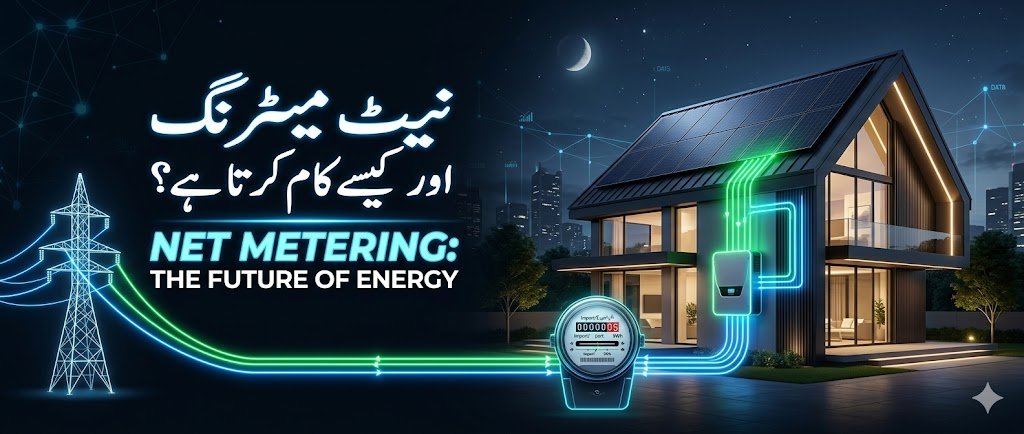
Net Metering Kya Hai Aur Kaise Kaam Karta Hai: Net metering is a billing system that allows people with solar panels to send extra electricity back to the national grid and receive credits or financial benefits in return. In simple words, your electricity meter can move both forward and backward depending on how much power you consume and how much you generate.
Net Metering Kya Hai Aur Kaise Kaam Karta Hai
Think of the electricity grid like a giant power bank. During the daytime, solar panels often produce more electricity than a home actually uses. Instead of wasting that extra electricity, the system exports it to the grid. Later, when solar production decreases at night, electricity can be imported back from the grid.
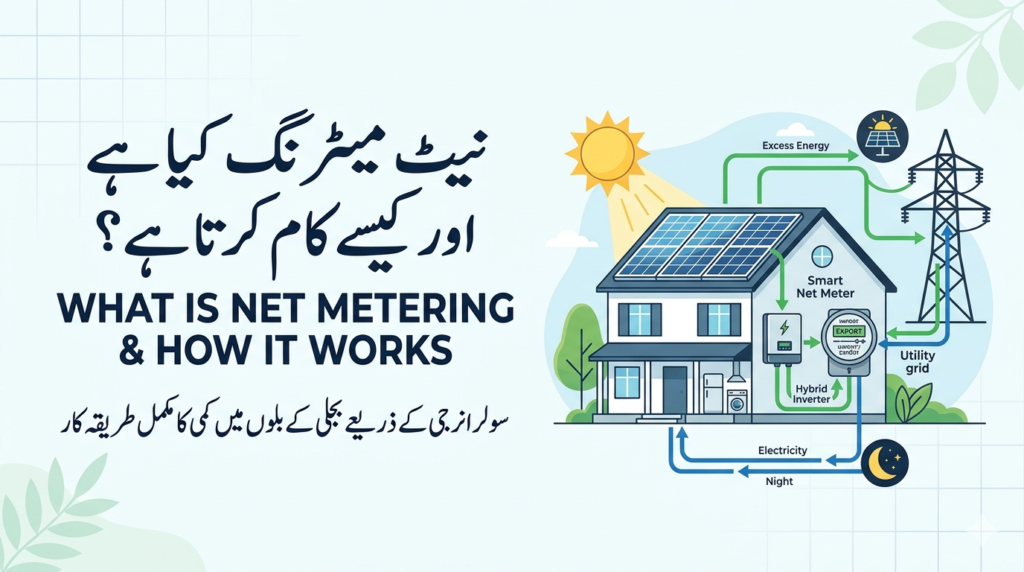
This setup creates a balance between consumption and production. For years, net metering became highly attractive in Pakistan because people could significantly reduce their electricity bills through unit adjustments. The system encouraged thousands of consumers to install rooftop solar systems. According to recent reports, Pakistan’s solar market has grown rapidly because of high electricity prices and increasing awareness about renewable energy. Net Metering Kya Hai Aur Kaise Kaam Karta Hai
The biggest reason people love net metering is financial savings. Imagine generating electricity from sunlight during the day and reducing your dependency on expensive grid electricity. That is exactly why homeowners and businesses consider solar energy a long-term investment instead of just an expense. Net Metering Kya Hai Aur Kaise Kaam Karta Hai
How Does Net Metering Work?
Understanding how net metering works is actually easier than many people think. The system follows a simple flow of electricity between your home, your solar panels, and the utility grid. Net Metering Kya Hai Aur Kaise Kaam Karta Hai
Solar Panels Generate Electricity
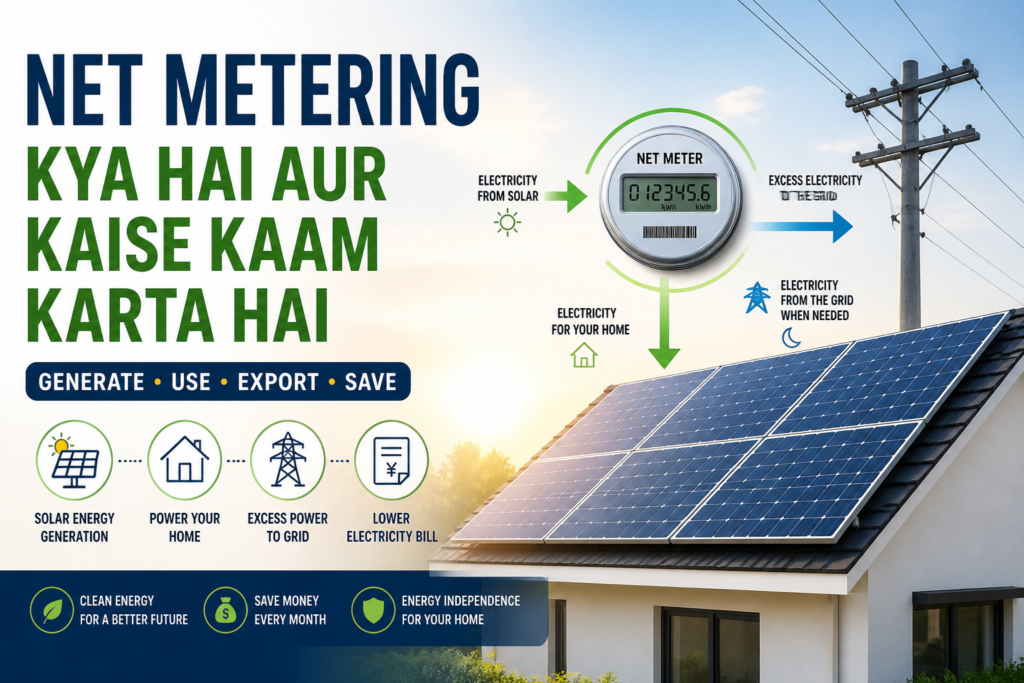
Solar panels absorb sunlight and convert it into electricity. This electricity is usually generated during daylight hours, especially when sunlight is strong between 10 AM and 4 PM. The electricity first powers your home appliances like fans, ACs, refrigerators, lights, and computers. Net Metering Kya Hai Aur Kaise Kaam Karta Hai
If your home consumes all the electricity being generated, nothing goes to waste. But in many cases, especially during afternoons, solar systems produce more electricity than the house needs. That extra electricity becomes surplus energy. Net Metering Kya Hai Aur Kaise Kaam Karta Hai
Exporting Extra Electricity to the Grid
When surplus electricity is generated, it flows toward the utility grid through a special bi-directional meter. This meter records exported units separately from imported units. Net Metering Kya Hai Aur Kaise Kaam Karta Hai
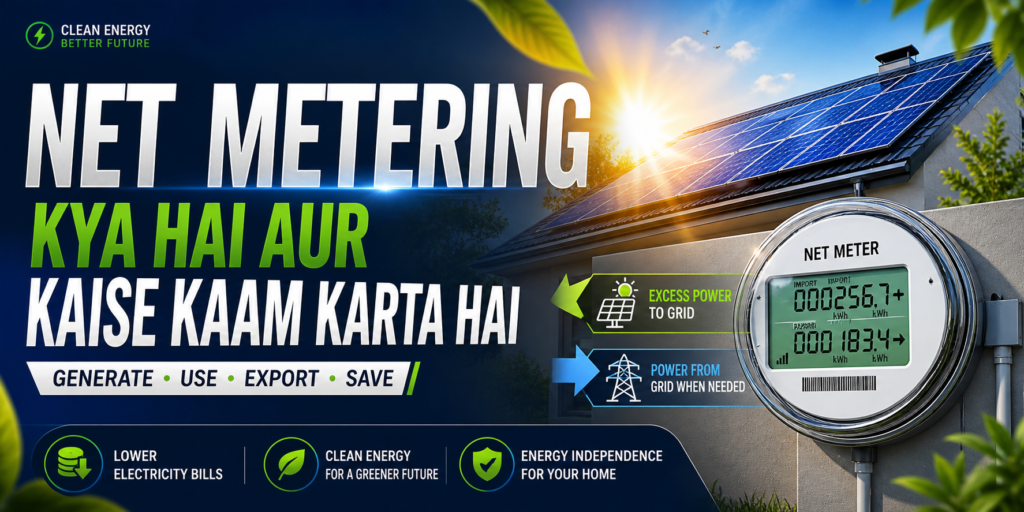
Earlier in Pakistan, many consumers benefited from a unit-for-unit adjustment system under traditional net metering. This meant exported units could offset imported units almost directly. However, the 2026 regulations introduced changes that shifted many new consumers toward a net billing framework instead.
You can think of this like depositing money into a bank account. During sunny hours, your solar system deposits electricity into the national grid. Net Metering Kya Hai Aur Kaise Kaam Karta Hai
Importing Electricity From the Grid
At night or during cloudy weather, solar production drops. Your home then automatically starts importing electricity from the grid.
This entire process happens seamlessly without requiring manual switching. Modern systems are smart enough to manage electricity flow automatically. The meter continuously tracks both imported and exported units so the electricity company can calculate your final bill.
For many families, this creates substantial savings over time, especially during summer months when solar production is highest. Net Metering Kya Hai Aur Kaise Kaam Karta Hai
Main Components of a Net Metering System
A net metering setup is made up of several important parts working together. If one component fails or is installed incorrectly, the system may not perform efficiently.
| Component | Function |
|---|---|
| Solar Panels | Generate electricity from sunlight |
| Inverter | Converts DC electricity into AC electricity |
| Bi-Directional Meter | Measures imported and exported electricity |
| Utility Grid | Supplies backup electricity when needed |
Solar Panels
Solar panels are the heart of the system. These panels capture sunlight and convert it into direct current (DC) electricity. The number of panels depends on your electricity usage and system size.
Most households in Pakistan install systems ranging from 5kW to 15kW depending on monthly consumption. Larger systems naturally produce more electricity and can export more units back to the grid. Net Metering Kya Hai Aur Kaise Kaam Karta Hai
Inverter
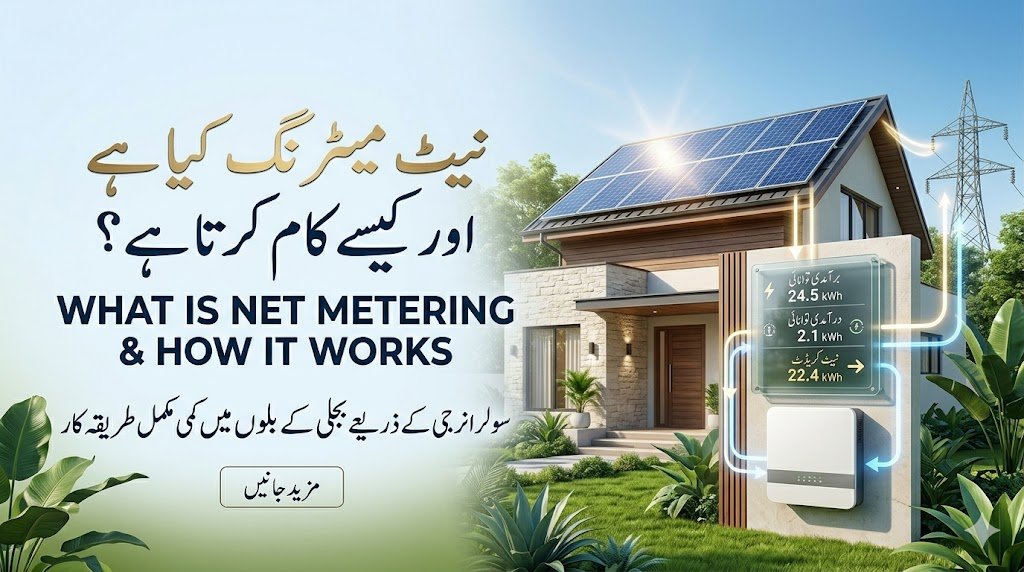
The inverter converts DC electricity into alternating current (AC), which is used by household appliances. Without an inverter, solar-generated electricity cannot power normal home devices. Net Metering Kya Hai Aur Kaise Kaam Karta Hai
Hybrid inverters are becoming increasingly popular because they can also work with batteries. After recent net billing changes, many people are considering hybrid systems for better energy storage. Community discussions online also show rising interest in batteries instead of relying only on grid export.
Bi-Directional Meter
This special meter is one of the most important components in net metering. Unlike traditional meters, it can record electricity moving in both directions.
When electricity enters your home from the grid, the meter records imported units. When excess electricity flows from your solar system into the grid, the meter records exported units.
Utility Grid Connection
The utility grid acts as both backup power and a storage partner. During low solar production, the grid supplies electricity to your home automatically.
This connection ensures uninterrupted electricity even during cloudy weather or nighttime.
Benefits of Net Metering
Net metering became popular because it offers several practical and financial benefits. For many households, the savings can be dramatic over time.
Lower Electricity Bills
The biggest advantage is obvious: reduced electricity bills.
Electricity tariffs in Pakistan continue to increase, especially for heavy users. Air conditioners, electric heaters, water motors, and kitchen appliances consume large amounts of electricity. Solar systems reduce dependency on grid electricity during daylight hours.
Many homeowners recover their solar investment within a few years through bill savings alone. After that, most of the generated electricity essentially becomes free.
Eco-Friendly Energy Solution
Solar energy is clean and renewable. Unlike fossil fuels, solar systems do not produce harmful emissions during electricity generation.
Every rooftop solar installation helps reduce pressure on Pakistan’s energy infrastructure and lowers environmental pollution. This shift toward renewable energy is becoming increasingly important as climate concerns grow worldwide.
Better Return on Investment
For years, net metering provided strong financial returns because exported electricity offset imported units effectively. Even after policy changes, solar systems still provide value when properly designed according to household consumption patterns.
Many experts now recommend sizing solar systems more carefully rather than oversizing them solely for export purposes.
Net Metering Rules in Pakistan (2026 Update)
Pakistan’s net metering system experienced major changes in 2026, and these updates significantly impacted new solar consumers.
New Net Billing Changes
The National Electric Power Regulatory Authority (NEPRA) introduced new Prosumer Regulations in 2026. Under these regulations, the traditional unit-for-unit adjustment system has largely been replaced with a net billing model for many new applicants.
Under the new framework:
- Consumers buy electricity from the grid at retail tariff rates.
- Exported electricity is purchased at a lower buyback rate.
- Settlement calculations are now different compared to older net metering systems.
Reports suggest exported electricity may be purchased at around the national average energy price instead of full retail rates.
This means households must now focus more on self-consumption rather than exporting large surplus energy to the grid.
Existing vs New Solar Users
One major debate in Pakistan involved whether existing net metering users would also be shifted to the new framework.
Later updates indicated that many existing users with valid agreements would continue under earlier terms until their agreements expire.
That gave relief to many homeowners who invested heavily in solar systems under older policies.
Eligibility Requirements for Net Metering
Not everyone automatically qualifies for net metering. There are certain requirements that consumers must fulfill before approval.
Required Solar System Size
Generally, the solar system size should match your sanctioned electrical load. Regulations and requirements may vary slightly depending on your electricity distribution company (DISCO).
Residential users commonly apply for:
- 5kW systems
- 10kW systems
- 15kW systems
- Larger commercial systems
Recent updates also removed licensing requirements for some smaller systems up to 25kW, simplifying installation for many users.
Documents Needed
Most applications require:
- Copy of CNIC
- Electricity bill copy
- Property ownership proof
- Single line diagram
- Solar system details
- Agreement forms
Different DISCOs like MEPCO, LESCO, FESCO, IESCO, and others may request additional documents.
Step-by-Step Net Metering Application Process
The approval process may sound complicated at first, but it becomes manageable when handled step by step.
Apply Through DISCO
The consumer first installs a compatible solar system through an approved vendor. After installation, the application is submitted to the relevant electricity company.
The DISCO reviews:
- System specifications
- Inverter compatibility
- Safety requirements
- Load details
If everything meets standards, the application proceeds to the next stage.
Inspection and Approval
The utility company conducts a site inspection to verify installation quality and technical compliance.
Once approved:
- A bi-directional meter is installed.
- An agreement is signed.
- The system becomes operational for import and export.
The approval timeline varies across regions and utility providers.
Advantages and Disadvantages of Net Metering
Like every technology, net metering has both strengths and limitations.
Major Advantages
| Advantages | Explanation |
|---|---|
| Lower bills | Reduces electricity expenses |
| Renewable energy | Environment-friendly solution |
| Long-term savings | Strong ROI over time |
| Energy independence | Less reliance on grid electricity |
Possible Drawbacks
| Drawbacks | Explanation |
|---|---|
| High upfront cost | Solar systems require major investment |
| Policy uncertainty | Government rules may change |
| Weather dependency | Solar production depends on sunlight |
| Lower export rates | New billing models reduce export benefits |
Many people now prefer hybrid solar systems with batteries because they reduce dependency on exporting electricity at lower rates. Reddit discussions and solar communities frequently recommend hybrid solutions after the 2026 policy changes.
Is Net Metering Still Worth It in Pakistan?
This is probably the most important question right now.
The answer depends on your goals.
If you want to eliminate electricity bills completely through exporting huge surplus energy, the newer net billing framework may reduce those benefits for new users. But if your main goal is reducing daytime electricity costs and protecting yourself from future tariff increases, solar still makes strong financial sense.
Pakistan continues to face expensive electricity rates, fuel adjustments, and rising energy demand. Solar energy still offers stability in an unpredictable energy market.
The smartest approach today is usually:
- Install a properly sized solar system.
- Focus on self-consumption.
- Consider hybrid inverters and batteries.
- Avoid oversizing solely for export income.
For households running air conditioners, offices, schools, shops, and factories during daytime hours, solar remains highly beneficial.
Conclusion
Net metering transformed Pakistan’s solar industry by allowing consumers to generate their own electricity and share extra energy with the national grid. Over the years, thousands of households reduced electricity costs through rooftop solar systems and smart energy usage.
The system works through a simple but powerful concept: generate electricity during the day, use what you need, and export the surplus back to the grid. A bi-directional meter keeps track of imported and exported units, helping calculate the final electricity bill.
Recent policy changes in 2026 introduced a shift toward net billing for many new users, changing how exported electricity is valued. Even with these updates, solar energy continues to be an attractive investment for people who want long-term savings and protection against rising electricity prices.
The future of energy in Pakistan is clearly moving toward renewable solutions. Whether you are a homeowner, business owner, or commercial user, understanding net metering can help you make smarter financial and energy decisions.