
Distributed Generation Concurrence in Pakistan: Distributed Generation, often called DG, is changing how electricity is produced and consumed in Pakistan. Instead of relying only on large power plants, consumers now generate their own electricity, usually through solar panels installed on rooftops or industrial sites. This shift is not just about convenience. It is about energy independence, cost savings, and sustainability.
Distributed Generation Concurrence in Pakistan
In Pakistan, distributed generation is regulated under the framework of the National Electric Power Regulatory Authority. This authority ensures that all solar installations connected to the grid follow strict technical and legal guidelines. The concept has gained massive popularity in recent years, especially due to rising electricity costs and frequent power shortages.
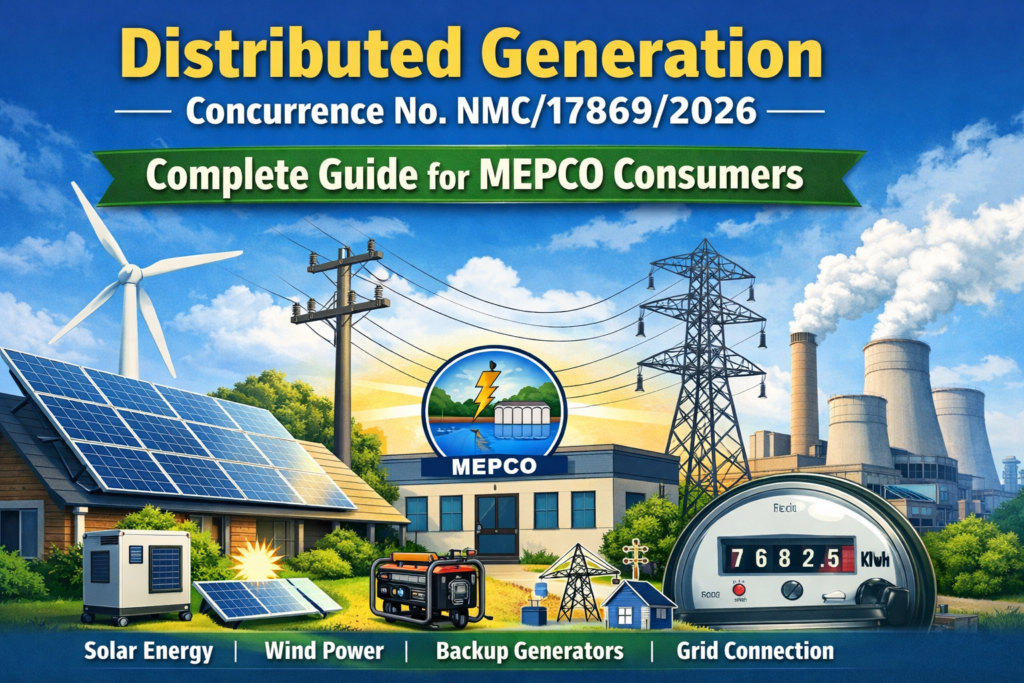
Understanding Solar Net Metering Systems
Solar net metering allows consumers to generate electricity and send excess energy back to the grid. Think of it like a two-way street. During the day, your solar panels produce energy, and any unused electricity flows into the grid. At night, you draw power from the grid as usual. Distributed Generation Concurrence in Pakistan
This system creates a balance between consumption and production. It also reduces dependency on traditional energy sources. According to recent regulatory documents, most distributed generation facilities in Pakistan are based on photovoltaic (PV) solar systems, with capacities ranging from small residential setups to large industrial installations. Distributed Generation Concurrence in Pakistan
Role of NEPRA in Distributed Generation
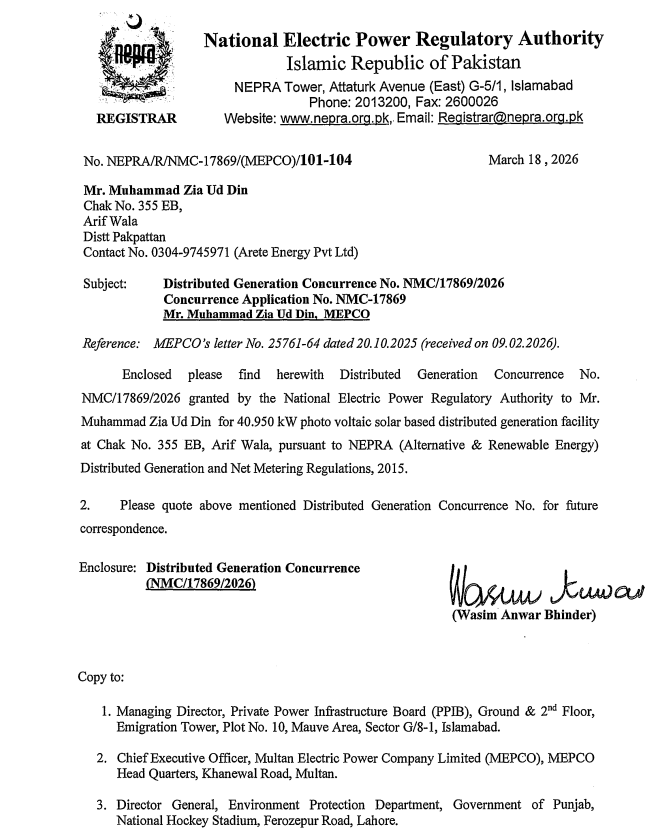
The regulatory backbone of distributed generation is NEPRA. It grants what is known as a “Concurrence”, which is essentially official approval for a consumer to install and operate a distributed generation system connected to the grid. Distributed Generation Concurrence in Pakistan
Without this approval, a solar system cannot legally export electricity. NEPRA ensures that every installation complies with safety standards, grid compatibility, and environmental regulations. This approval also protects both the consumer and the utility company from operational risks. Distributed Generation Concurrence in Pakistan
Overview of Concurrence Application No. NMC-17869
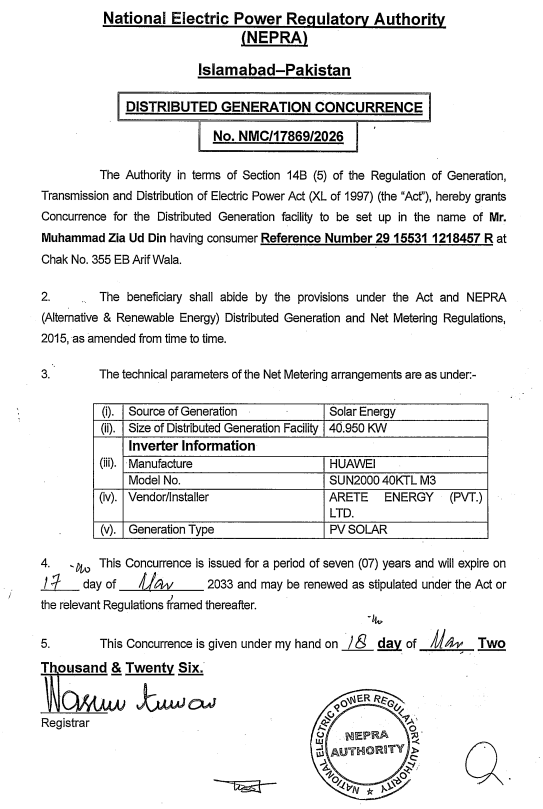
The case of Distributed Generation Concurrence No. NMC/17869/2026 represents a typical approval process under NEPRA for solar-based energy generation.
Applicant Details – Mr. Muhammad Zia Ud Din
The concurrence application was submitted by Mr. Muhammad Zia Ud Din, a consumer seeking to install a distributed generation facility under the MEPCO region. While specific technical details of this exact application are not publicly indexed, similar approvals show that applicants are typically individuals or businesses installing solar PV systems for self-consumption and grid export. Distributed Generation Concurrence in Pakistan
Association with MEPCO
The application falls under the jurisdiction of Multan Electric Power Company, commonly known as MEPCO. This distribution company is responsible for supplying electricity across South Punjab, including areas like Multan, Bahawalpur, and Dera Ghazi Khan. Distributed Generation Concurrence in Pakistan
MEPCO plays a critical role in verifying the technical feasibility of the installation. It ensures that the local grid can handle the additional load and that the system complies with all standards before forwarding the application to NEPRA. Distributed Generation Concurrence in Pakistan
What Does a DG Concurrence Mean?
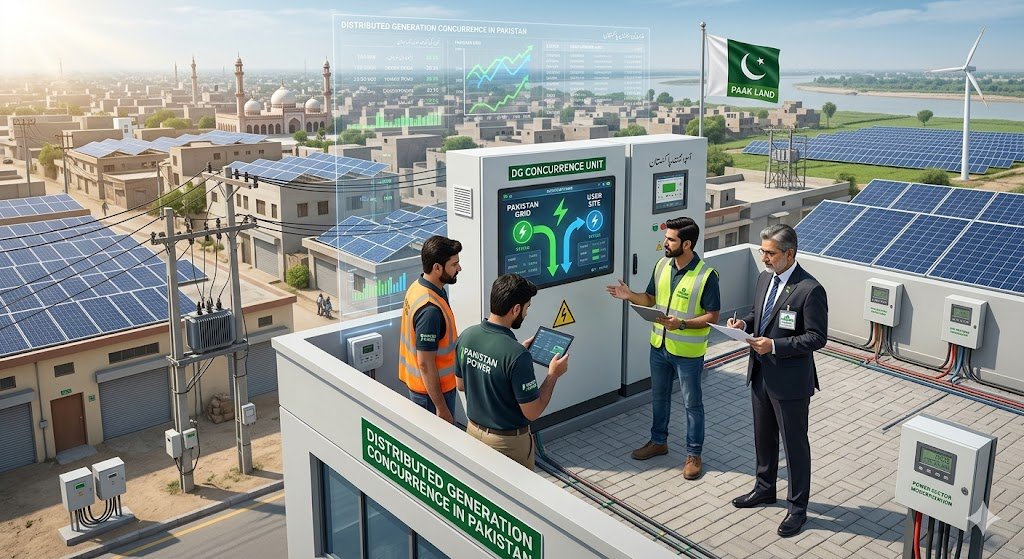
A DG concurrence is more than just a certificate. It is a legal document that allows a consumer to become a “prosumer”, someone who both produces and consumes electricity.
Legal Approval Under NEPRA Regulations
The concurrence is granted under the NEPRA Distributed Generation and Net Metering Regulations, 2015. These regulations define how small-scale renewable energy systems can be integrated into the national grid. Distributed Generation Concurrence in Pakistan
Once granted, the concurrence confirms that the system meets all legal, technical, and environmental requirements. It also authorizes the installation of a bi-directional meter, which tracks both imported and exported electricity. Distributed Generation Concurrence in Pakistan
Validity and Compliance Requirements
Most DG concurrences are valid for a fixed period, typically around 7 years, after which renewal may be required.
During this period, the consumer must comply with all operational guidelines. Any major modification, such as increasing system capacity or changing equipment, requires a fresh approval. This ensures that the grid remains stable and safe for all users. Distributed Generation Concurrence in Pakistan
Technical Aspects of DG Concurrence
Understanding the technical side helps you see why this process is so structured and detailed.
Solar PV System Capacity
Each DG system is approved for a specific capacity, measured in kilowatts (kW). For example, recent approvals under MEPCO include systems ranging from 33 kW to over 300 kW, depending on the user’s requirements. Distributed Generation Concurrence in Pakistan
This capacity must match the sanctioned load of the consumer. Installing a larger system without approval can lead to penalties or even cancellation of the net metering agreement.
Inverter and Installation Standards
The inverter is the heart of any solar system. It converts DC electricity generated by panels into AC electricity used in homes and industries. NEPRA requires certified inverters and approved vendors for installation.
These standards ensure that the system does not cause voltage fluctuations or other issues in the grid. It is similar to ensuring that every vehicle on the road meets safety standards before being allowed to operate.
Application Process for DG Concurrence
Getting a DG concurrence may sound complicated, but it follows a clear step-by-step process.
Step-by-Step Procedure
- Submit application to MEPCO
- Provide technical details of the solar system
- Site inspection by DISCO
- Forwarding of case to NEPRA
- Issuance of concurrence
- Installation of net meter
Each step is designed to verify that the system is safe, efficient, and compliant.
Required Documents
Applicants usually need:
- Copy of CNIC
- Electricity bill
- System design and specifications
- Installer details
- Undertaking forms
These documents help authorities verify ownership, system capacity, and technical feasibility.
Benefits of Distributed Generation
Why are so many people applying for DG concurrences? The answer lies in the benefits.
Financial Savings
Electricity prices in Pakistan have been rising steadily. By generating your own power, you can significantly reduce your monthly bills. In some cases, users even earn credits by exporting excess energy to the grid.
This creates a long-term financial advantage. Although the initial investment may seem high, the payback period is usually between 3 to 5 years.
Environmental Impact
Solar energy is clean and renewable. It reduces reliance on fossil fuels and lowers carbon emissions. In a country facing climate challenges, distributed generation offers a sustainable solution.
Role of MEPCO in DG Approvals
MEPCO is not just a facilitator. It is an active participant in the entire process.
Grid Integration Responsibilities
MEPCO ensures that the grid can safely handle the additional electricity generated by DG systems. It also installs and maintains net meters.
Monitoring and Compliance
After approval, MEPCO continues to monitor the system. Any violation of approved capacity or technical standards can result in penalties.
Recent Trends in DG Concurrences (2025–2026)
The number of DG approvals has increased significantly in recent years.
Increase in Solar Adoption
From small residential setups to large industrial plants, solar adoption is booming. Recent approvals show systems ranging from 70 kW to 500 kW, reflecting growing confidence in solar energy.
Policy Changes and Net Billing Updates
Pakistan is also transitioning from net metering to net billing models, which may affect how exported electricity is compensated. This shift is aimed at maintaining grid stability and financial sustainability.
Challenges in DG Concurrence Process
Despite its benefits, the process is not without challenges.
Technical Constraints
Grid limitations can sometimes delay approvals. In areas with high solar penetration, adding more DG systems may require infrastructure upgrades.
Regulatory Delays
Processing times can vary. Delays in approvals can impact project timelines and increase costs for applicants.
Future of Distributed Generation in Pakistan
The future looks promising. With increasing awareness and supportive policies, distributed generation is expected to play a major role in Pakistan’s energy mix.
As technology improves and costs decrease, more consumers will adopt solar energy. Government initiatives and regulatory support will further accelerate this transition.
Conclusion
Distributed Generation Concurrence No. NMC/17869/2026 is a clear example of how Pakistan is moving toward decentralized energy solutions. It highlights the growing role of individuals and businesses in generating their own electricity while contributing to the national grid. Distributed Generation Concurrence in Pakistan
For consumers under MEPCO, understanding this process is essential. It is not just about installing solar panels. It is about becoming part of a smarter, cleaner, and more efficient energy system.
FAQs
1. What is DG concurrence in Pakistan?
DG concurrence is official approval from NEPRA allowing a consumer to install and operate a solar system connected to the grid.
2. How long is a DG concurrence valid?
Typically, it is valid for around 7 years and can be renewed.
3. Can I increase my solar system capacity after approval?
Yes, but you must apply for a new concurrence before making any changes.
4. What happens if I exceed my approved capacity?
You may face penalties or cancellation of your net metering agreement.
5. Is net metering still available in Pakistan in 2026?
It is gradually being replaced by net billing, but existing users may continue under current agreements for a limited time.