
MEPCO Net Metering New Update 2026: Pakistan’s energy sector is changing rapidly, and MEPCO net metering has become one of the hottest topics among homeowners, businesses, and solar users in 2026. Rising electricity prices, long load-shedding hours, and increasing fuel adjustment charges have pushed thousands of people toward solar energy systems. In cities covered by Multan Electric Power Company, more consumers are now installing solar panels to reduce electricity bills and earn credits through net metering. All Time Up To Date Information.
MEPCO Net Metering New Update 2026
The new updates introduced in 2026 have brought several important changes for solar users. These updates affect application procedures, approval times, smart meter installations, buyback rates, and technical requirements. If you are planning to install a solar system or already own one, understanding these latest rules can save you time, money, and frustration. MEPCO Net Metering New Update 2026
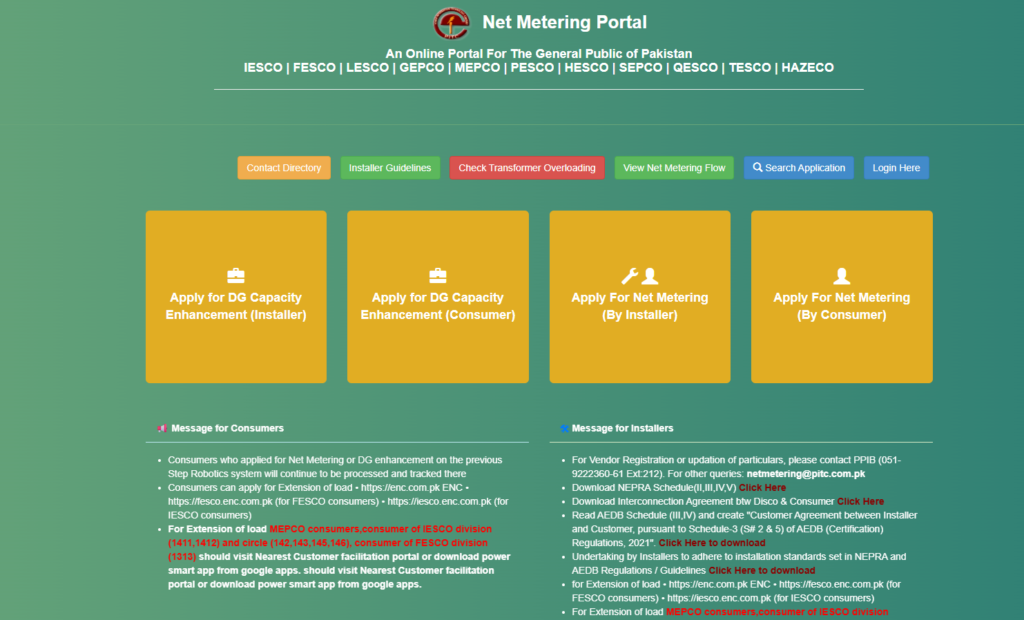
Many people still think net metering is complicated, but the reality is much simpler. Imagine your electricity meter working like a two-way road. During the daytime, your solar panels generate extra electricity and send it back to the grid. At night, when your panels are not producing enough power, you use electricity from the grid again. The extra units you supplied earlier are adjusted in your monthly bill. It works almost like a digital wallet for electricity.
This guide covers everything you need to know about the MEPCO net metering new update 2026, including policy changes, eligibility, approval process, costs, benefits, and future trends in Pakistan’s solar energy market. MEPCO Net Metering New Update 2026
What Is MEPCO Net Metering?
Net metering is a billing mechanism that allows solar energy users to export extra electricity to the national grid and receive credits against their electricity consumption. Under the system, consumers with solar panels connected to the grid can reduce their electricity bills significantly. MEPCO Net Metering New Update 2026
In Pakistan, net metering is regulated by National Electric Power Regulatory Authority, commonly known as NEPRA. Distribution companies like MEPCO are responsible for implementing these regulations in their respective areas. MEPCO Net Metering New Update 2026
How Net Metering Works in Pakistan
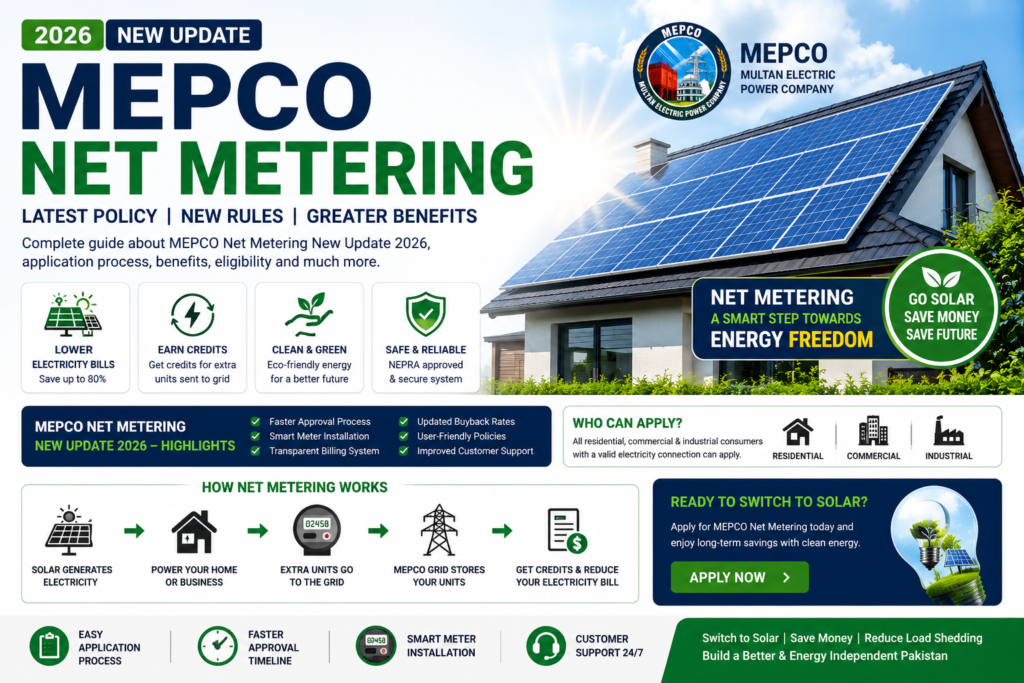
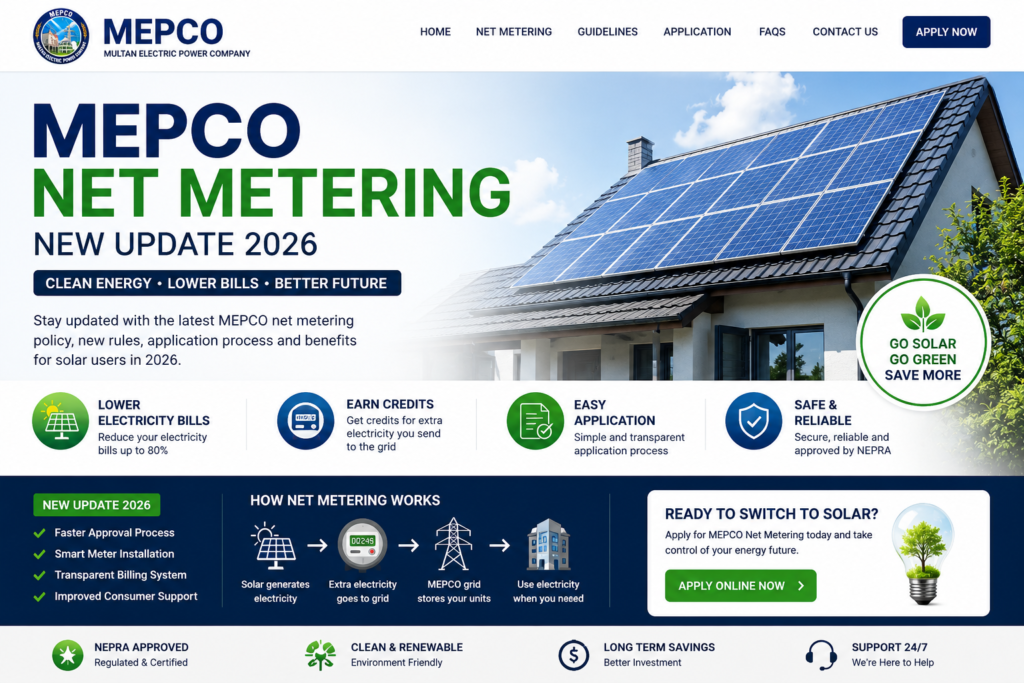
The process sounds technical, but it is actually very straightforward. Your solar system first powers your home or office directly. If your system generates more electricity than you consume, the excess units automatically flow into the national grid through a bidirectional smart meter.
At the end of the billing cycle, imported and exported units are adjusted. If you exported more units than you used, credits are added to your account. These credits can reduce future electricity bills. It is almost like storing sunlight in the electricity network for later use. MEPCO Net Metering New Update 2026
In 2026, MEPCO has improved monitoring systems and digital tracking methods, making the process more transparent for consumers. Many users can now track solar generation and exported units more accurately than before. MEPCO Net Metering New Update 2026
Why Solar Energy Is Growing Fast
Electricity prices in Pakistan have increased sharply during the last few years. Fuel adjustment charges, taxes, and rising inflation have made monthly bills difficult for middle-class families and businesses. Because of this, solar energy is no longer considered a luxury. It has become a practical financial decision.
Another major reason is falling solar panel prices. Modern solar technology is cheaper, more efficient, and easier to maintain. Many households recover their solar investment within four to five years due to lower electricity costs. MEPCO Net Metering New Update 2026
People also understand the environmental impact better now. Solar energy reduces dependence on fossil fuels and decreases carbon emissions. Instead of relying entirely on expensive thermal power plants, consumers can generate clean electricity directly from sunlight. MEPCO Net Metering New Update 2026
Latest MEPCO Net Metering Updates in 2026
The MEPCO net metering new update 2026 includes several important changes that directly affect solar users across South Punjab and nearby regions. MEPCO Net Metering New Update 2026
New Application Process
One of the biggest changes in 2026 is the improved application system. Earlier, many applicants faced delays because of paperwork issues and manual verification procedures. MEPCO has now streamlined much of the process. MEPCO Net Metering New Update 2026
Applicants are now encouraged to submit complete documentation through approved solar installers. This reduces errors and speeds up approvals. Digital verification systems have also improved transparency in application tracking.
Consumers are advised to ensure all technical documents are accurate before submission. Even small mistakes in load details or system specifications can still cause delays.
Updated Approval Timeline
In previous years, net metering approvals sometimes took several months. The 2026 update aims to reduce waiting times significantly. In many cases, applications now move faster through inspection and technical approval stages.
MEPCO has increased inspection teams and upgraded coordination with NEPRA-certified installers. This helps reduce bottlenecks that frustrated many users in the past.
Still, timelines can vary depending on the area, transformer load conditions, and document verification status. Urban areas generally experience faster processing than remote regions.
Smart Meter Installation Changes
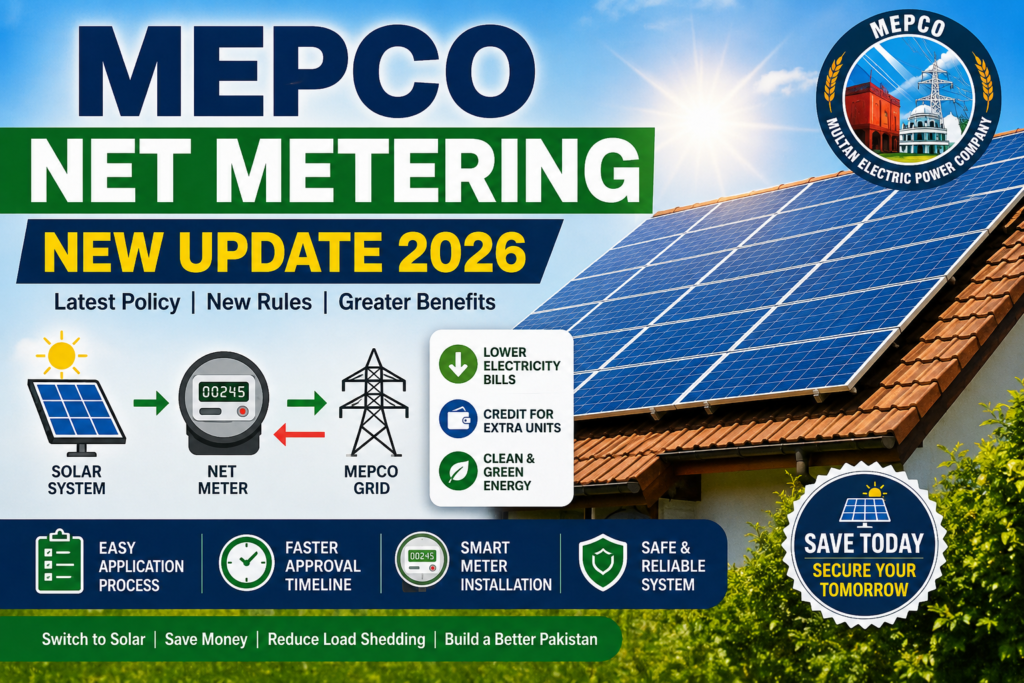
The installation of bidirectional smart meters has also improved in 2026. These advanced meters measure both imported and exported electricity separately. They are more accurate and support better billing transparency.
MEPCO has introduced stricter technical standards for smart meter compatibility. Consumers must ensure their solar systems meet approved specifications before installation.
This update also aims to reduce technical losses and prevent unauthorized connections. Smart meters are becoming an essential part of Pakistan’s move toward a more digital electricity infrastructure.
New Net Metering Policy 2026
The updated policy framework has generated significant discussion among solar users and energy experts across Pakistan.
Updated Buyback Rates
One of the most talked-about topics is the buyback rate for exported electricity units. Many consumers closely monitor these rates because they directly impact solar system savings.
The government and NEPRA continue reviewing electricity pricing mechanisms to balance consumer benefits and grid sustainability. While solar users still enjoy substantial savings, changes in export unit pricing may affect long-term financial calculations.
Despite concerns, solar energy remains highly beneficial because the biggest savings come from self-consumption during daytime usage.
Government Rules and NEPRA Regulations
NEPRA has introduced additional compliance measures to improve safety and technical reliability. Solar systems must now meet stricter installation standards to qualify for net metering approval.
Certified inverters, approved wiring systems, and professional installation practices are now more important than ever. Consumers should always hire experienced installers who understand MEPCO and NEPRA regulations properly.
These rules may seem strict, but they help protect both consumers and the national electricity grid from technical faults.
Impact on Residential Users
Residential users remain the largest beneficiaries of net metering in Pakistan. Families with high electricity bills can still save thousands of rupees every month through properly designed solar systems.
The 2026 updates mainly encourage better technical compliance rather than discouraging solar adoption. Households with heavy daytime electricity use can achieve even greater savings because they directly consume most generated electricity.
For many families, solar power has become a shield against unpredictable electricity prices. Instead of worrying about monthly tariff increases, they gain more control over energy costs.
Eligibility Requirements for MEPCO Net Metering
Not every solar setup automatically qualifies for net metering. MEPCO follows specific eligibility rules that consumers must meet.
Required Solar System Capacity
According to standard requirements, consumers generally need a minimum connected load and compatible solar system capacity to apply for net metering. The system should also comply with grid connection standards.
Most residential users install systems between 5kW and 15kW, depending on electricity consumption patterns. Commercial users often require larger systems.
Choosing the correct system size is extremely important. Oversized systems may increase costs unnecessarily, while undersized systems may not provide expected savings.
Documents Needed for Approval
Applicants usually need the following documents:
| Required Document | Purpose |
|---|---|
| Copy of CNIC | Identity verification |
| Recent electricity bill | Consumer reference verification |
| Solar system details | Technical approval |
| Single line diagram | Electrical design verification |
| Ownership documents | Property verification |
| Installer certifications | Safety compliance |
Incomplete documentation remains one of the most common reasons for approval delays. Consumers should carefully review all paperwork before submission.
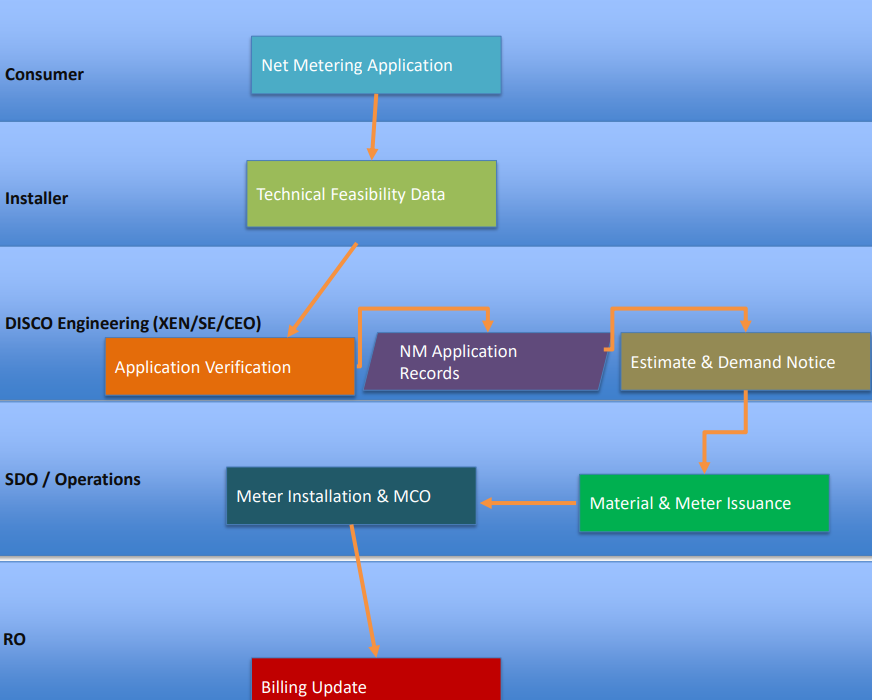
Step-by-Step MEPCO Net Metering Application Process
Understanding the application process can make everything easier and less stressful.
Applying Through Solar Installer
Most consumers apply through NEPRA-approved solar companies. These installers prepare technical documents, submit applications, and coordinate inspections with MEPCO.
A reliable installer acts almost like a tour guide through a complicated city. Without proper guidance, small technical mistakes can create major delays later.
Consumers should compare installer experience, reviews, warranty support, and after-sales services before choosing a company.
Verification and Inspection Process
After document submission, MEPCO conducts technical verification and site inspections. Engineers check system capacity, inverter compatibility, wiring quality, and safety standards.
If issues are found, corrections may be required before approval moves forward. This stage ensures the solar system will not negatively impact the electricity network.
Many delays occur because of improper installations or incomplete diagrams. Hiring qualified professionals greatly reduces these problems.
Final Connection and Activation
Once inspections are completed successfully, MEPCO installs the bidirectional smart meter and activates net metering services.
After activation, exported electricity units begin appearing in monthly bills. Consumers can finally enjoy reduced electricity costs and credit adjustments.
For many families, this moment feels rewarding because months of planning and investment finally start producing real financial benefits.
Benefits of MEPCO Net Metering in 2026
The popularity of net metering continues growing because the financial and environmental advantages are substantial.
Lower Electricity Bills
The biggest benefit is obvious: reduced electricity bills. Households with properly designed systems often cut electricity costs dramatically.
People using air conditioners, electric appliances, and water motors during daytime hours benefit the most. Instead of purchasing expensive electricity from the grid, they use solar-generated energy directly.
With rising electricity tariffs in Pakistan, these savings can make a huge difference for family budgets.
Faster Return on Investment
Solar systems may look expensive initially, but long-term savings are impressive. Many consumers recover installation costs within several years.
After the recovery period, electricity generation becomes almost free apart from maintenance expenses. This makes solar one of the smartest long-term investments for homeowners.
Compared to rising utility costs, solar systems provide financial stability and predictability.
Eco-Friendly Energy Solution
Solar energy also supports environmental sustainability. Every solar panel installed reduces reliance on fossil fuels and lowers greenhouse gas emissions.
Pakistan receives abundant sunlight throughout most of the year, making solar energy highly practical. Instead of wasting this natural resource, net metering allows consumers to turn sunlight into real economic value.
Common Problems and Solutions
Although net metering offers many benefits, some users still face challenges.
Delays in Approval
Approval delays remain one of the biggest complaints. Missing documents, overloaded transformers, or technical errors often slow the process.
Consumers can reduce delays by hiring experienced installers and ensuring all paperwork is accurate before submission.
Regular follow-ups with installers and MEPCO offices can also help track application progress more effectively.
Meter Installation Issues
Smart meter shortages or technical compatibility issues occasionally create installation delays.
Some older electrical systems may require upgrades before approval. Consumers should discuss these possibilities with installers early in the planning stage.
Proper maintenance after installation is also important. Dust accumulation, inverter faults, and loose wiring can reduce solar performance over time.
MEPCO Net Metering Charges and Costs
The total cost of net metering depends on several factors, including system size, equipment quality, installation complexity, and approval charges.
A standard residential solar system with net metering can cost significantly less today compared to a few years ago. Improved technology and market competition have lowered prices considerably.
Consumers should avoid choosing installers based only on the cheapest price. Poor-quality panels or inverters may create performance issues later. Investing in reliable equipment usually provides better long-term savings and durability.
Maintenance costs are generally low, especially for modern systems. Occasional cleaning and inverter monitoring are usually enough to maintain strong performance.
Future of Solar Energy in Pakistan
The future of solar energy in Pakistan looks extremely promising. Rising electricity demand and increasing utility prices will likely push even more consumers toward renewable energy solutions.
Government policies may continue evolving, but the overall trend clearly supports solar adoption. Pakistan has massive solar potential because of its long sunny seasons and favorable climate conditions.
Battery storage systems are also becoming more popular. In coming years, many consumers may combine net metering with battery backups for even greater energy independence.
The country’s energy landscape is changing rapidly. Solar energy is no longer an alternative technology. It is becoming a central part of Pakistan’s electricity future.
Conclusion
The MEPCO net metering new update 2026 brings important improvements for solar users across Pakistan. Faster approval systems, better smart meter technology, stricter technical standards, and updated regulations are shaping a more organized solar energy environment.
For homeowners and businesses struggling with high electricity costs, net metering remains one of the smartest long-term investments available today. The combination of lower monthly bills, environmental benefits, and energy independence makes solar power highly attractive.
Anyone planning to install a solar system should carefully understand the latest MEPCO and NEPRA requirements before starting the process. Choosing experienced installers, using quality equipment, and submitting accurate documents can make the entire journey smoother and more successful.
As electricity prices continue rising, solar energy may soon become less of an option and more of a necessity for many Pakistani households.
FAQs
1. What is the minimum solar system size for MEPCO net metering?
Most consumers typically install systems starting from around 5kW, but eligibility depends on connected load and MEPCO regulations.
2. How long does MEPCO net metering approval take in 2026?
Approval times vary depending on documentation, inspections, and technical conditions, but the process is generally faster compared to previous years.
3. Can I apply for net metering without a certified installer?
Using a certified installer is highly recommended because technical compliance and documentation are critical for approval.
4. Does net metering completely remove electricity bills?
Not always. Bills can still include taxes, fixed charges, or additional units if electricity consumption exceeds solar generation.
5. Is solar investment still profitable after the 2026 updates?
Yes, solar energy remains financially beneficial for most residential and commercial users due to rising electricity costs.