
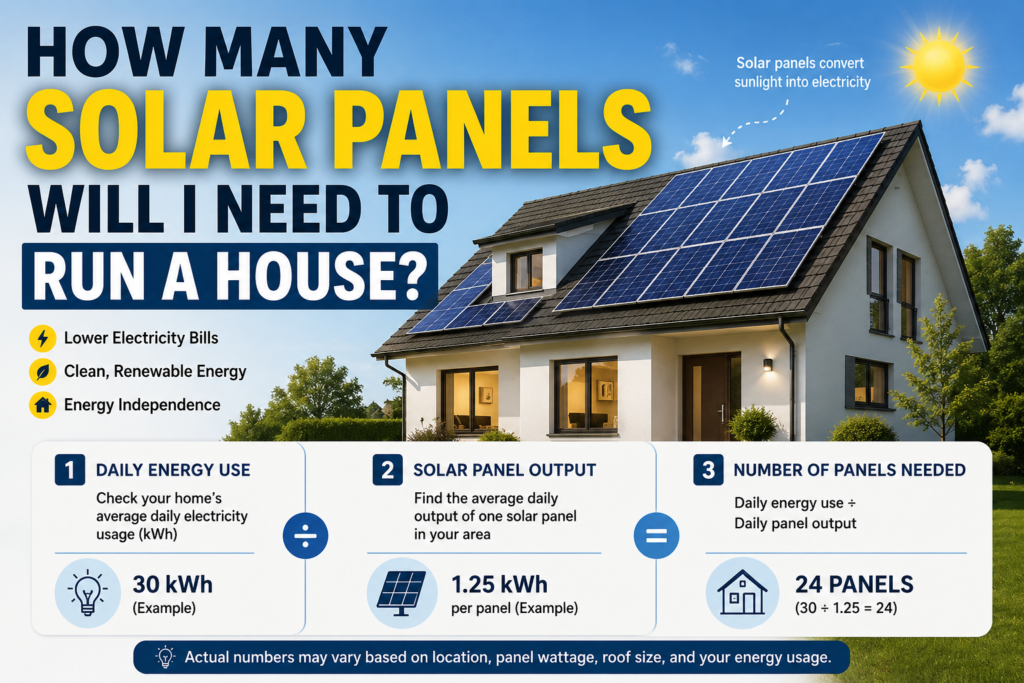
How Many Solar Panels Will I Need to Run a House: If you have ever looked at your electricity bill and thought, “There has to be a better way,” you are not alone. Thousands of homeowners are now moving toward solar energy because electricity prices keep rising every year. Solar panels are no longer considered a luxury for rich homeowners. In 2026, they have become one of the smartest long-term investments for homes around the world. The biggest question most people ask before switching is simple: How many solar panels will I need to run a house?
How Many Solar Panels Will I Need to Run a House
The answer depends on several things, including your electricity usage, where you live, how much sunlight your roof gets, and the power rating of the solar panels you choose. Some houses may only need 10 to 15 panels, while larger homes with heavy electricity usage may require 25 or more. Recent solar industry reports show that the average U.S. home typically needs between 15 and 25 solar panels to cover annual electricity consumption.
Think of your solar system like a water tank. If your house uses more water every day, you need a bigger tank. Solar works the same way. Homes with air conditioners, electric heaters, EV chargers, and multiple appliances consume more electricity, which means more panels are needed. Once you understand the basics, calculating the right number becomes much easier than most people think.
Why More Homeowners Are Switching to Solar in 2026
The solar industry is growing faster than ever. One major reason is rising utility costs. Families are tired of unpredictable electricity bills, especially during summer months when air conditioning usage increases. Solar gives homeowners more control over their monthly expenses. Instead of paying the utility company forever, people are choosing to generate their own electricity from sunlight. How Many Solar Panels Will I Need to Run a House
The growth of solar technology has also made systems more efficient and affordable. According to recent industry data, standard residential solar panels in 2026 commonly produce between 400W and 450W each. That means homeowners now need fewer panels than they did several years ago to generate the same amount of electricity. Prices for solar equipment have also dropped due to increased manufacturing and supply. How Many Solar Panels Will I Need to Run a House
Another important reason is energy independence. Many homeowners want protection from power outages and future utility rate increases. Solar systems combined with battery storage allow homes to continue running even during blackouts. Recent reports show home batteries are becoming increasingly popular because they help store extra solar power for nighttime use. How Many Solar Panels Will I Need to Run a House
Environmental awareness is also playing a role. Solar energy reduces carbon emissions and dependence on fossil fuels. In places like Texas, solar generation is now expected to surpass coal power generation in 2026, showing how quickly renewable energy is transforming the electricity market.
What Determines the Number of Solar Panels You Need
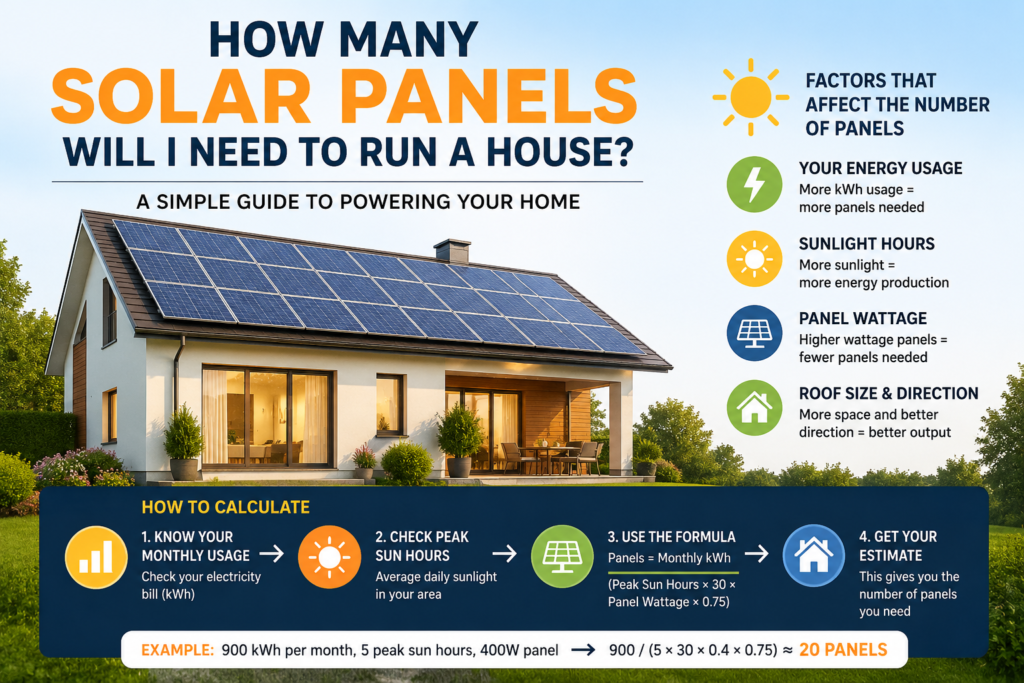
There is no one-size-fits-all answer when it comes to solar systems. Every house is different. The number of panels needed depends on several important factors working together like pieces of a puzzle. How Many Solar Panels Will I Need to Run a House
Your Monthly Electricity Usage
The biggest factor is your electricity consumption. This is measured in kilowatt-hours, also called kWh. You can find this number on your electricity bill. Homes that consume more electricity naturally require larger solar systems. How Many Solar Panels Will I Need to Run a House
The average American household uses around 10,500 to 10,800 kWh per year, which equals roughly 875 to 900 kWh per month. If your usage is lower than average, you may need fewer panels. If you have a large family, electric vehicle, swimming pool, or heavy air conditioning usage, your system size may increase significantly.
For example:
| Monthly Electricity Usage | Estimated Panels Needed |
|---|---|
| 500 kWh | 10–12 Panels |
| 900 kWh | 18–22 Panels |
| 1500 kWh | 28–35 Panels |
These estimates assume modern 400W solar panels under average sunlight conditions.
Sunlight Hours in Your Location
Your location matters more than many people realize. A house in Arizona receives much more sunlight than a house in Seattle. That means homes in sunnier regions need fewer panels to generate the same electricity.
Solar experts often use “peak sun hours” to calculate system performance. Most areas receive between 3.5 and 6.5 peak sunlight hours daily. The more sun your roof receives, the more electricity each panel can generate. How Many Solar Panels Will I Need to Run a House
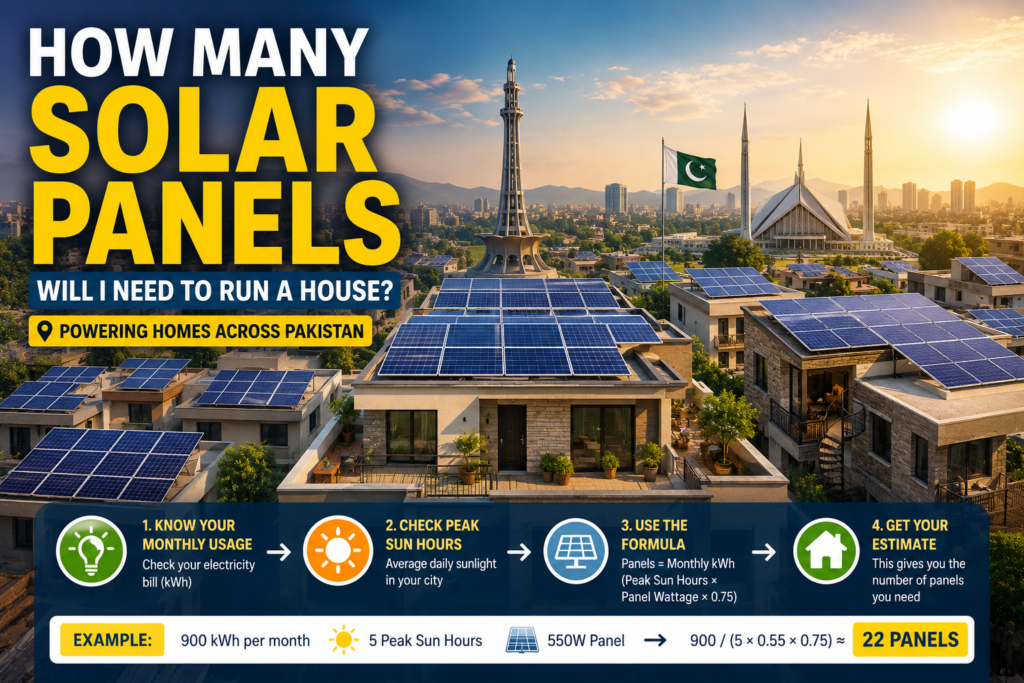
This is why two identical homes may require completely different solar system sizes depending on location. It is similar to drying clothes outside. On a sunny hot day, clothes dry quickly. On cloudy days, it takes longer. Solar panels react the same way to sunlight intensity.
Solar Panel Wattage
Modern solar panels are much more powerful than older models. Most residential panels in 2026 range from 400W to 450W. Higher wattage panels generate more electricity, reducing the number of panels required. How Many Solar Panels Will I Need to Run a House
For example:
- A 300W panel produces less electricity
- A 450W panel produces more electricity
- Fewer high-wattage panels may save roof space
This is especially helpful for homes with limited roof area.
Roof Size and Direction
Your roof plays a major role in solar production. South-facing roofs generally receive the most sunlight in the Northern Hemisphere. Roof angle, shading from trees, nearby buildings, and chimneys can all affect system efficiency. How Many Solar Panels Will I Need to Run a House
Industry data shows most homes have enough usable roof space for 15 to 30 solar panels. Still, shaded roofs may require additional panels to compensate for reduced production.
Average Number of Solar Panels for Different House Sizes
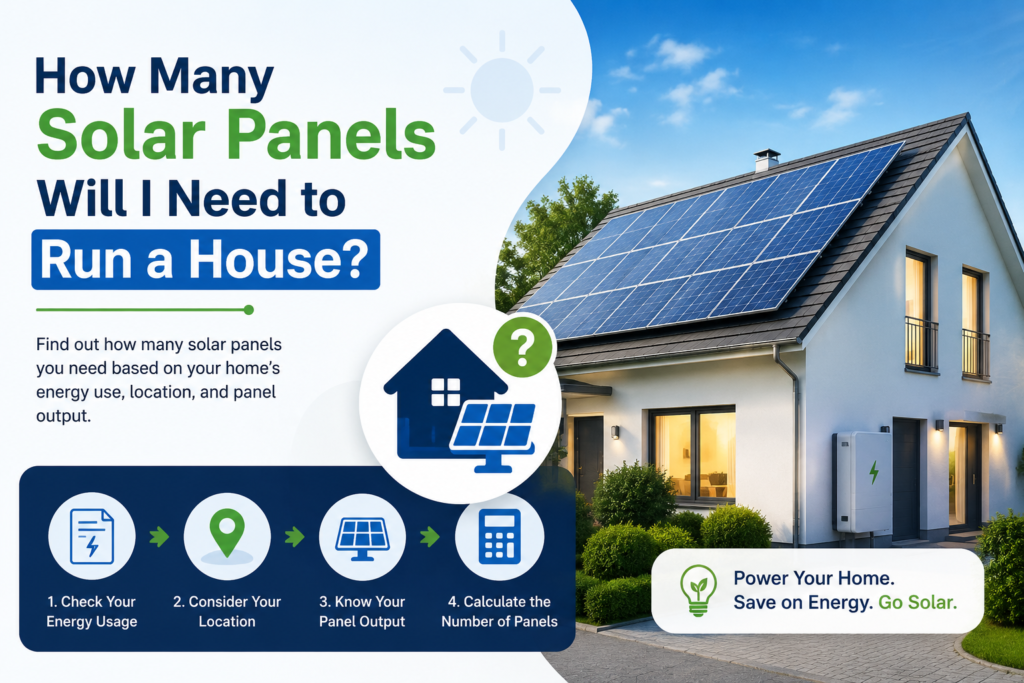
People often ask how many solar panels are needed based on house size alone. While square footage matters, electricity usage is usually more important. A small house with multiple air conditioners may consume more electricity than a larger energy-efficient home. How Many Solar Panels Will I Need to Run a House
Small Homes
Small homes under 1,000 square feet generally use less electricity. These homes often need between 8 and 14 solar panels depending on appliances and local climate conditions. How Many Solar Panels Will I Need to Run a House
If the house uses energy-efficient appliances and LED lighting, the required system size becomes even smaller. Tiny homes and minimalist households can sometimes run on fewer than 10 panels.
Medium-Sized Homes
Medium homes between 1,500 and 2,500 square feet are the most common category. These homes typically require between 15 and 24 panels. This estimate assumes average electricity usage with standard household appliances.
Families with moderate electricity habits often fall into this range. Running air conditioning frequently during summer can increase panel requirements slightly.
Large Homes
Large houses with multiple floors, electric heating systems, pools, or EV charging stations may need 25 to 40 panels or more. Luxury homes with heavy energy demands usually require larger systems to offset electricity bills fully.
Some homeowners intentionally install larger systems to prepare for future electricity usage increases, especially if they plan to purchase electric vehicles later.
How to Calculate Solar Panels for Your House
The process of calculating solar panels is actually straightforward once you understand the formula.
Understanding kWh Usage
Start by checking your electricity bills from the past 12 months. Add the total yearly kWh usage. This gives you the most accurate picture of your household energy consumption.
For example:
- Annual usage = 10,800 kWh
- Daily usage = about 30 kWh
Solar Panel Output Formula
Solar experts commonly use formulas like this:
Panels Needed=Peak Sun Hours×365×Panel Wattage×0.86Annual kWh Usage
This formula includes estimated system losses caused by heat, wiring, dust, and inverter efficiency.
Example Calculation
Let’s say your home uses 10,800 kWh annually. Your location receives 5 peak sunlight hours daily, and you use 400W solar panels.
The calculation would show you need around 18 to 22 panels to cover your electricity usage fully.
It may sound technical at first, but solar installers usually perform these calculations quickly using specialized software. Understanding the basics simply helps you make smarter decisions and avoid overspending.
How Much Roof Space Do Solar Panels Need
Roof space is another major consideration. Most modern residential solar panels occupy around 17 to 18 square feet each.
Here is a rough estimate:
| Number of Panels | Approximate Roof Space |
|---|---|
| 10 Panels | 170–180 sq ft |
| 20 Panels | 340–360 sq ft |
| 30 Panels | 510–540 sq ft |
Most average-sized homes have enough roof space for a full solar system. Problems usually occur when roofs have unusual shapes, multiple chimneys, or shading issues.
If roof space is limited, homeowners can use higher-efficiency panels that generate more electricity in smaller areas. Ground-mounted systems are another option for properties with larger yards.
Factors That Can Increase or Reduce Panel Requirements
Several hidden factors can affect how many solar panels your house actually needs.
Weather Conditions
Cloudy weather reduces solar production. Homes in rainy or snowy climates often require slightly larger systems to compensate for lower sunlight levels.
Dust, pollution, and extreme heat can also reduce efficiency. Solar panels work best in cool sunny conditions rather than extremely hot temperatures.
Energy-Efficient Appliances
Energy-efficient homes require fewer solar panels. Switching to LED lights, inverter air conditioners, efficient refrigerators, and smart thermostats can reduce electricity usage dramatically.
Think of it like fixing leaks in a water pipe before installing a bigger water tank. Lowering electricity waste reduces the overall system size needed.
Battery Storage Systems
Adding batteries changes how solar systems operate. Batteries store extra electricity for nighttime use or power outages. While batteries do not necessarily reduce panel requirements, they improve energy independence and backup power capability.
Recent reports show battery prices continue falling, making solar-plus-storage systems increasingly attractive for homeowners.
On-Grid vs Off-Grid Solar Systems
One of the biggest decisions homeowners face is choosing between on-grid and off-grid systems.
An on-grid system stays connected to the utility grid. During sunny hours, extra electricity can be exported back to the grid through net metering programs. At night, the home draws electricity from the grid again. This setup usually requires fewer batteries and lower upfront costs.
An off-grid system operates independently without utility support. These systems require larger battery banks and often more solar panels to ensure reliable electricity during cloudy days.
Most homeowners choose on-grid systems because they are cheaper and easier to maintain. Off-grid systems are more common in remote areas without reliable utility access.
Cost of Installing Solar Panels in 2026
Solar system costs vary depending on panel quality, installer pricing, batteries, and system size. Industry estimates suggest most residential solar systems cost between $15,000 and $25,000 before incentives.
After tax credits and incentives, costs may fall significantly.
Here is a general estimate:
| System Size | Estimated Cost Before Incentives |
|---|---|
| 5 kW System | $12,000–$16,000 |
| 8 kW System | $18,000–$24,000 |
| 12 kW System | $28,000–$36,000 |
The good news is that solar systems usually pay for themselves over time through electricity savings. Many homeowners recover installation costs within 7 to 12 years depending on local electricity rates and incentives.
Are Solar Panels Worth It for Homes?
For many homeowners, the answer is yes. Solar panels provide long-term savings, protection from rising utility prices, and cleaner energy production.
Recent homeowner discussions online show many users reporting significant reductions in monthly electricity bills after switching to solar. Homes with batteries and smart meters can manage electricity usage even more efficiently.
Solar also increases property value in many markets. Buyers increasingly prefer energy-efficient homes with lower utility costs.
Still, solar is not perfect for every house. Homes with heavily shaded roofs or extremely low electricity usage may see slower returns on investment. The best way to know for sure is by getting a professional solar assessment based on your exact electricity usage and roof conditions.
Conclusion
Figuring out how many solar panels you need to run a house is easier once you understand the key factors involved. Your electricity usage, sunlight availability, panel wattage, roof size, and energy habits all play an important role in determining the right system size.
For most homes in 2026, the average requirement falls between 15 and 25 solar panels. Smaller homes may need fewer, while larger energy-hungry homes may require 30 or more panels. Modern solar technology has become more efficient, more affordable, and more practical than ever before.
Solar energy is no longer just about saving the environment. It is about saving money, gaining energy independence, and preparing for a future where electricity costs continue rising. Whether you want lower utility bills, backup power during outages, or long-term investment value, solar panels have become one of the smartest upgrades a homeowner can make today.
FAQs
1. How many solar panels are needed for a 3-bedroom house?
A typical 3-bedroom house usually needs between 15 and 22 solar panels depending on electricity usage and local sunlight conditions.
2. Can a house run completely on solar power?
Yes, many homes can run entirely on solar power if the system is properly sized and includes battery storage or net metering support.
3. How much electricity does one solar panel produce daily?
A modern 400W solar panel typically produces around 1.5 to 2 kWh of electricity daily depending on sunlight conditions.
4. Do solar panels work during cloudy weather?
Yes, solar panels still generate electricity during cloudy weather, although production levels are lower compared to sunny days.
5. How long do solar panels last?
Most solar panels last 25 to 30 years or longer with proper maintenance and gradual efficiency reduction over time.