
Rising Energy Costs and Household Impact
Smart ways to Save Electricity at home: Electricity bills are climbing, and most households feel the pressure every month. You might notice that even when your usage doesn’t change much, the cost still increases.
That’s because energy tariffs are rising globally, and countries like Pakistan are especially affected due to fuel costs and infrastructure challenges. Saving electricity is no longer just about being careful; it has become a practical necessity. Think about it like managing your monthly budget. If electricity takes up a big chunk, reducing it frees up money for other important needs.
Smart ways to Save Electricity at home
Another angle to consider is how wasteful habits quietly drain your finances. Leaving lights on, running appliances unnecessarily, or using outdated devices may seem harmless, but over time they stack up into a surprisingly high bill. When you actively control your electricity usage, you gain more control over your expenses. It’s like plugging tiny leaks in a water tank. Each fix may seem small, but together they make a big difference.
Environmental Benefits of Energy Efficiency
Saving electricity isn’t just about money. It also plays a huge role in protecting the environment. Most electricity still comes from fossil fuels, which release carbon emissions into the atmosphere. When you reduce your consumption, you’re indirectly lowering pollution and helping fight climate change. Smart ways to Save Electricity at home
Imagine every home in your city cutting down just 10% of its electricity use. The impact would be massive. Fewer power plants would need to run at full capacity, and overall demand would drop. It’s a collective effort where individual actions add up. By adopting energy-efficient habits, you’re contributing to a cleaner, healthier future without sacrificing comfort. Smart ways to Save Electricity at home
Understanding Your Electricity Usage
Reading Your Electricity Bill
Most people glance at their electricity bill and only focus on the total amount. That’s a missed opportunity. Your bill actually tells a story about your consumption patterns. It shows units consumed, peak hours, and sometimes even comparisons with previous months. Smart ways to Save Electricity at home
When you start paying attention to these details, you can identify trends. For example, do your bills spike during summer due to air conditioning? Or do winter appliances like heaters cause the jump? Understanding this helps you make smarter decisions. It’s like checking your bank statement to track spending habits. Smart ways to Save Electricity at home
Identifying Energy-Hungry Appliances
Not all appliances are equal. Some quietly consume far more electricity than others. Air conditioners, refrigerators, water heaters, and washing machines are usually the biggest contributors. If you want to reduce your bill, these are the first areas to focus on. Smart ways to Save Electricity at home
A simple way to think about it is this: high-power devices that run for long hours cost the most. By optimizing how you use them, you can cut down a large portion of your energy usage without affecting your lifestyle too much. Smart ways to Save Electricity at home
Smart Lighting Solutions
Switching to LED Bulbs
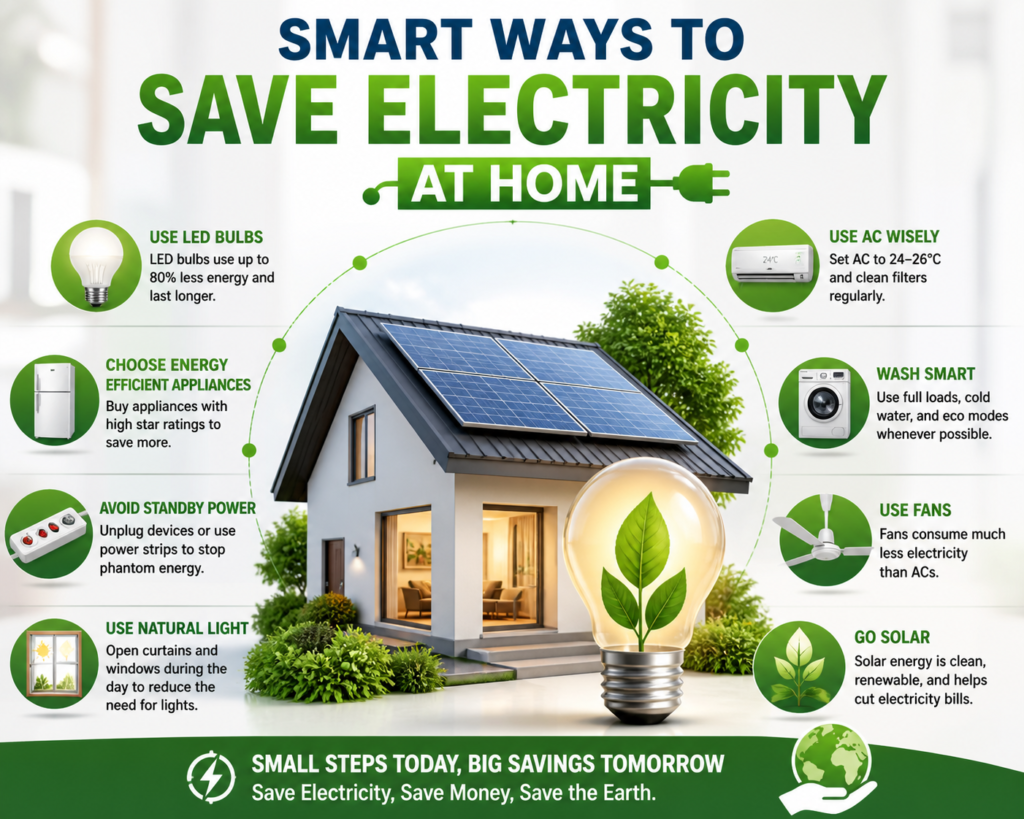
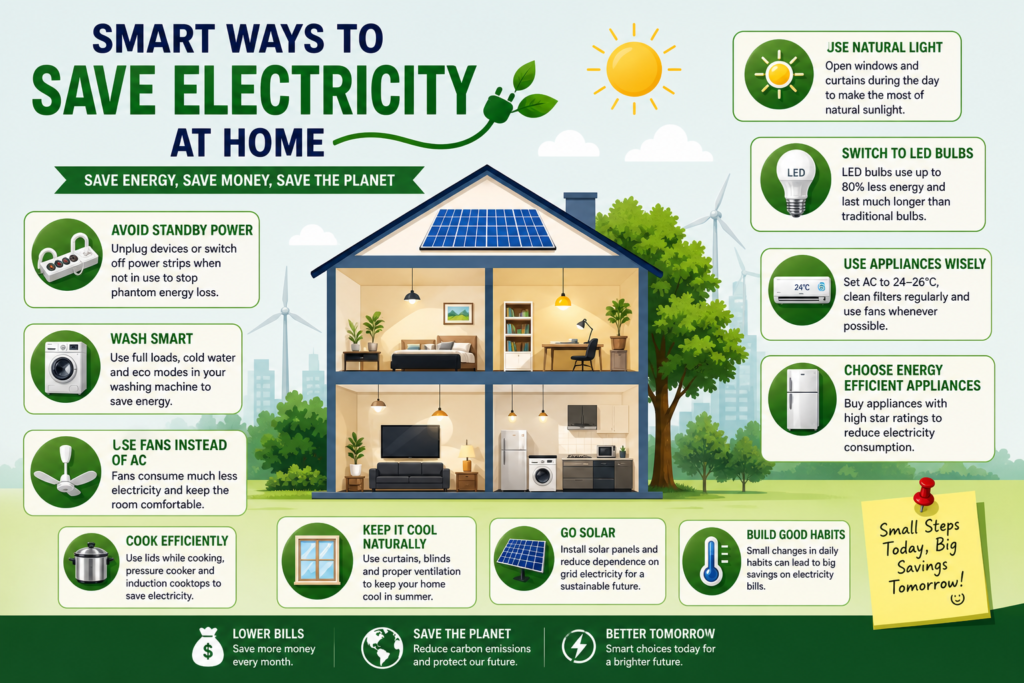
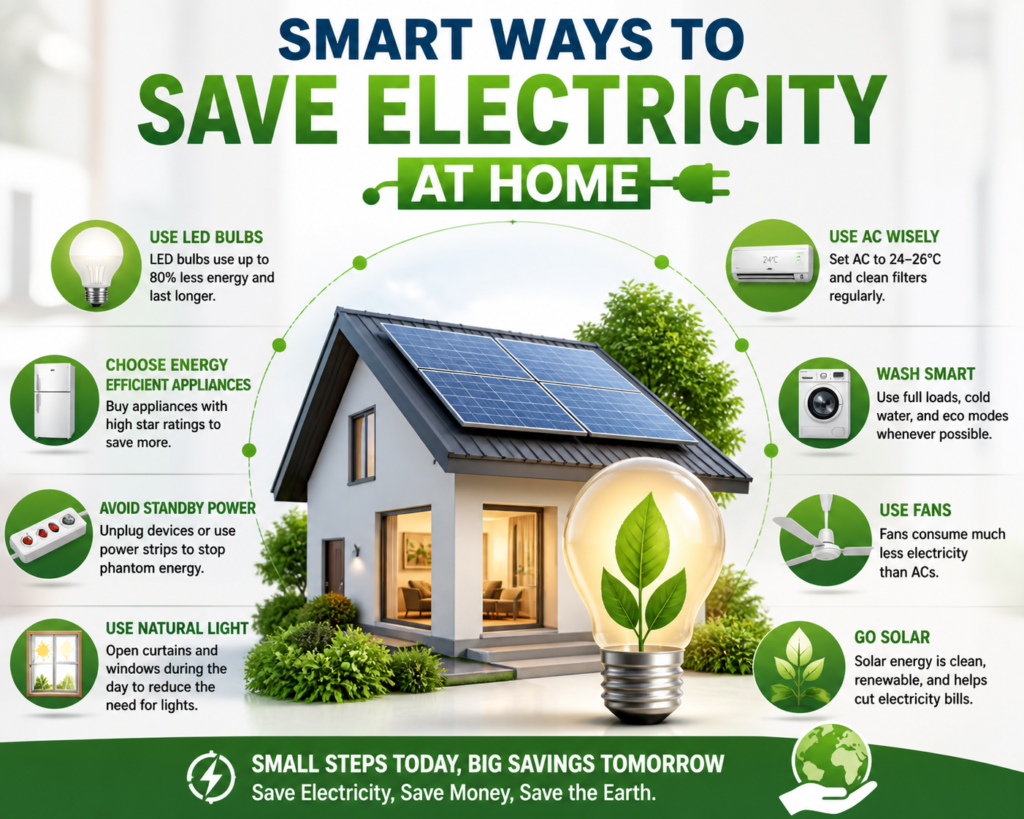
Lighting is one of the easiest places to start saving electricity. Traditional incandescent bulbs waste a lot of energy as heat. LED bulbs, on the other hand, use up to 80% less electricity and last much longer. Smart ways to Save Electricity at home
Imagine replacing all the bulbs in your home with LEDs. The upfront cost might seem higher, but the long-term savings are worth it. You also avoid the hassle of frequent replacements, which makes LEDs both economical and convenient. Smart ways to Save Electricity at home
Using Natural Light Effectively
Natural light is free, yet many homes don’t use it properly. Opening curtains during the day and arranging furniture to allow sunlight in can reduce the need for artificial lighting. Smart ways to Save Electricity at home
Think of sunlight as a built-in resource you’re not fully using. By designing your daily routine around daylight, you can cut down electricity usage without even noticing a change in your comfort. Smart ways to Save Electricity at home
Efficient Use of Home Appliances
Energy-Efficient Appliances (Star Ratings)
Modern appliances come with energy ratings that indicate how efficient they are. Choosing a higher-rated appliance may cost more initially, but it saves money over time through reduced electricity consumption.
Here’s a simple comparison:
| Appliance Type | Standard Model | Energy-Efficient Model |
|---|---|---|
| Refrigerator | High usage | Low usage |
| AC Unit | More power | Less power |
| Washing Machine | Longer cycles | Optimized cycles |
This shows how smarter choices at the time of purchase can lead to long-term savings.
Smart Usage Habits
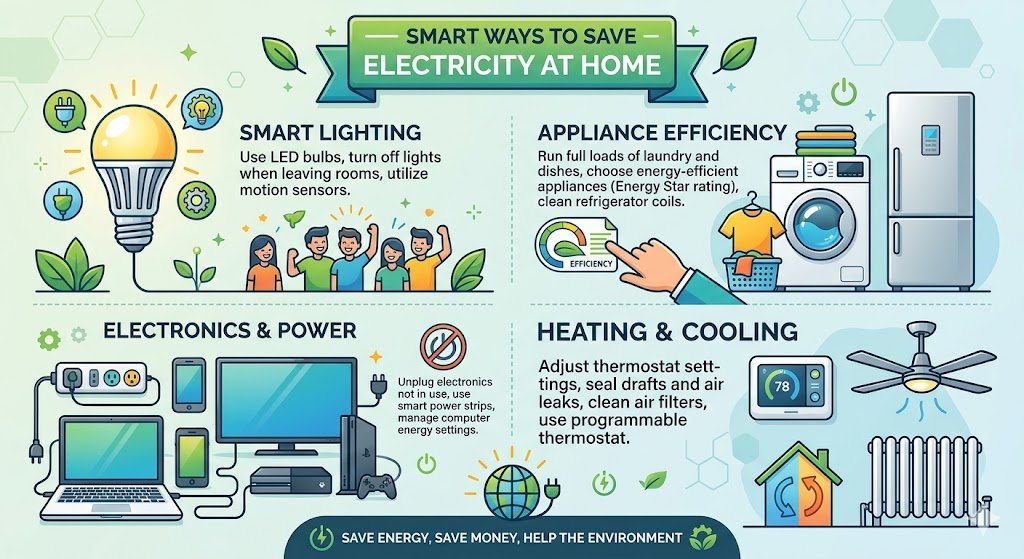
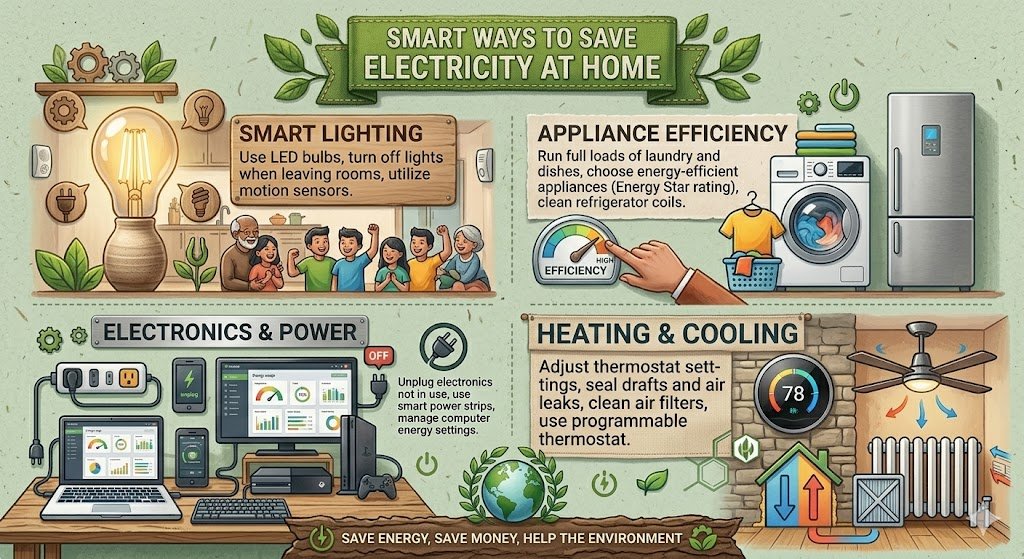
Even the best appliances won’t help if used inefficiently. Running a washing machine with half loads or keeping the fridge door open for too long wastes energy.
Using appliances wisely is like driving a car efficiently. Smooth, mindful usage consumes less energy and extends the life of the device.
Cooling and Heating Optimization
Air Conditioner Efficiency Tips
Air conditioners are major electricity consumers, especially in hot climates. Setting your AC to 24–26°C instead of extremely low temperatures can significantly reduce energy use.
Regular maintenance also matters. Cleaning filters and ensuring proper airflow can improve efficiency. Think of it like breathing through a clean versus clogged mask. The cleaner it is, the less effort it takes.
Insulation and Ventilation
A well-insulated home keeps cool air inside and hot air outside. Proper ventilation also helps maintain a comfortable temperature without over-relying on ACs or heaters.
Simple steps like sealing gaps in doors and windows can make a noticeable difference. It’s like closing all the doors in a room before turning on the AC. You get faster cooling with less energy.
Standby Power and Phantom Load
What is Phantom Energy
Many devices continue to consume electricity even when turned off. This is called phantom load or standby power. TVs, chargers, and microwaves are common examples.
It may seem negligible, but collectively, it adds up. It’s like a dripping tap. One drop doesn’t matter, but over time it fills a bucket.
How to Reduce Standby Power
Unplugging devices or using power strips can help eliminate standby consumption. Smart plugs can also automatically cut power when devices are not in use.
These small changes are easy to implement and require minimal effort, yet they contribute to noticeable savings over time.
Smart Technology for Energy Saving
Smart Plugs and Devices
Smart plugs allow you to control appliances remotely and schedule their usage. This prevents unnecessary energy consumption.
Imagine turning off all unused devices with a single tap on your phone. It adds convenience while saving electricity.
Home Automation Systems
Advanced home automation systems can optimize energy usage based on your routine. Lights, fans, and ACs can automatically adjust depending on occupancy and time of day.
It’s like having a personal assistant managing your electricity usage efficiently.
Solar Energy and Alternative Solutions
Benefits of Solar Panels
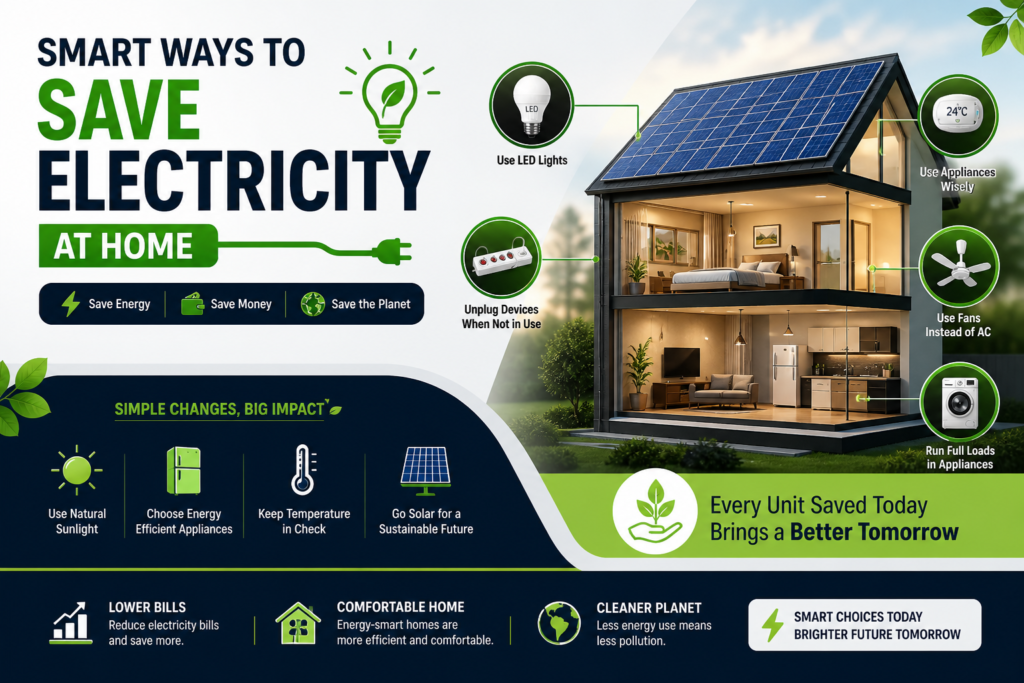
Solar panels convert sunlight into electricity, reducing reliance on the grid. While the initial investment can be high, the long-term savings are substantial.
In sunny regions, solar energy is a practical and sustainable solution. It’s like generating your own power instead of buying it.
Net Metering and Cost Savings
Net metering allows you to send excess electricity back to the grid and earn credits. This reduces your overall bill and maximizes the benefits of solar energy.
Over time, this can even offset your electricity costs significantly.
Daily Habits That Save Electricity
Small Changes, Big Impact
Turning off lights when leaving a room, using fans instead of AC when possible, and reducing unnecessary usage are simple habits that make a difference.
These actions don’t require investment, just awareness and consistency.
Family Awareness and Participation
Saving electricity works best when everyone in the household is involved. Educating family members about energy-saving habits ensures consistent results.
It becomes a shared responsibility rather than a one-person effort.
Long-Term Strategies for Energy Efficiency
Home Upgrades and Renovations
Investing in energy-efficient windows, insulation, and appliances can significantly reduce electricity usage in the long run.
These upgrades may seem costly at first, but they pay off over time through lower bills.
Government Incentives and Rebates
Many governments offer incentives for energy-efficient upgrades and solar installations. Taking advantage of these programs can reduce initial costs and encourage sustainable living.
Conclusion
Saving electricity at home is not about sacrificing comfort. It’s about using energy smarter. From switching to LED bulbs to adopting solar solutions, every step contributes to lower bills and a healthier environment. When you combine smart technology with mindful habits, the results are both immediate and long-lasting. The key is consistency. Small actions done daily can lead to significant savings over time.